
Skin health · November 2026
Recurring Scabbing Spot: Prepare for Your Skin Appointment
Prepare a useful history and photos for a skin appointment about a spot that scabs and returns. What to record, what to ask and why not to assume acne.
By ScanSkinAI Editorial Team ·
Source-based educational guidance. This edition has not yet undergone a clinician review.
Quick answer
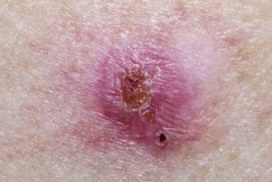
A “pimple” that repeatedly bleeds, scabs, seems to heal and then returns should be checked by a clinician. Acne and irritation can cause persistent spots, but basal cell carcinoma can also look like a small bump or non-healing sore. A picture alone cannot tell which it is.
At a glance
Acne or irritation
Possible, especially with picking, but persistent recurrence still deserves reassessment.
Possible BCC pattern
A sore that heals and reopens, a persistent pearly bump or a changing scaly patch.
Urgent deterioration
Spreading painful redness, fever or uncontrolled bleeding needs more urgent help.
Why the same spot deserves a second look
Ordinary blemishes can be slow to settle, especially when picked or irritated by skincare. However, a recurring lesion in exactly the same place is a reason to reconsider the assumption that it is simply acne. The relevant clues are its history, repeated bleeding or crusting, growth and failure to heal.
Basal cell carcinoma, or BCC, is a common skin cancer. It often grows slowly and rarely spreads to distant parts of the body, but it can damage nearby tissue if untreated. Slow growth is not a reason to ignore a lesion.
Possible explanations, not a diagnosis
A blocked follicle, inflamed acne lesion, irritation, a benign growth or skin cancer can produce a bump that attracts repeated attention. Picking can make any of these bleed and scab. A clinician needs to consider the whole pattern rather than one feature.
BCC may appear as a shiny or pearly bump, a scaly patch, a scar-like area or a sore that heals and reopens. In darker skin it may be brown or black rather than pink. It can occur beyond the most sun-exposed areas.
What to tell your GP or dermatologist
Describe the cycle: when it first appeared, how often it scabs, whether it bleeds on its own, and whether its size or outline changes. Tell the clinician about treatments tried and whether you have been picking it.
Avoid presenting the concern only as “acne treatment is not working.” Explain that the same lesion is repeatedly returning. Mention previous skin cancer, immunosuppression and any new symptoms.
- Take an unfiltered, focused photo before applying makeup.
- Keep dates and a short description of any change.
- Record spontaneous bleeding separately from bleeding after picking.
- Ask what follow-up is needed if the lesion does not settle.
While waiting for assessment
Avoid squeezing, scratching or repeatedly using harsh spot treatments on the lesion. Do not attempt to burn, freeze or remove it at home. If it is an open sore, ask a pharmacist or clinician about suitable basic wound care.
Do not set yourself a fixed extra waiting period if the lesion already persists or is changing. Seek help sooner for worsening pain, spreading redness, pus or fever. Heavy bleeding that will not stop or feeling seriously unwell requires urgent medical help.
What happens at the appointment
The clinician will review the history and examine the skin, sometimes using a dermatoscope. A biopsy may be needed to establish the diagnosis. Treatment depends on the confirmed condition, its location, size and other individual factors.
If a clinician recommends biopsy or further assessment, a low-concern AI result should not override that advice. If you are told to observe it, clarify what change should bring you back and how long the follow-up period is.
Use online screening without delaying care
An AI skin-growth screening tool can organise a photograph-based concern and explain that a professional assessment may be needed. It cannot establish that a recurring sore is harmless and cannot perform a biopsy.
For a medical opinion you can explore the existing dermatologist-review service, but photo review also has limits. Keep any in-person appointment or urgent referral already arranged. Do not use cosmetic facial analysis as a substitute for a lesion assessment.
Common questions
Does every recurring pimple mean cancer?
No. Many recurring spots are benign. Persistence and repeated bleeding mean that guessing from appearance is not enough.
Can BCC be dark rather than pink?
Yes. BCC can be pigmented, including brown or black, and appearance varies across skin tones.
Should I keep using acne acids?
Avoid repeatedly treating an unexplained recurring sore with harsh products. Ask a clinician what it is before continuing lesion-specific treatment.
Sources & further reading
Educational information, not a diagnosis or personalised treatment advice. Reference library · Editorial and medical review policy
Choose an informed next step
Explore the existing screening or review service. Do not delay medical attention for a concerning or changing lesion.
Explore skin-growth screeningRelated guides
Changing Age Spot: What to Check Before Cosmetic Treatment
A changing age spot needs assessment before bleaching, peels or laser. Learn what to document, why photos cannot rule out melanoma, and when to see a GP.
Read guideChanging Mole: An England GP Referral Checklist
What to say about a changing mole, how urgent and routine NHS referrals differ, and what the 28-day Faster Diagnosis Standard does and does not mean.
Read guideWinter Rash: Dry Skin, Eczema or a Fungal Infection?
Compare winter dry skin, eczema and fungal rash clues; find safe first steps, symptoms needing urgent help and when a pharmacist or clinician should assess you.
Read guideDry, Cracked Hands in Winter: Repair Routine and When to Get Help
Why hands crack in cold weather, a simple daily repair routine, and the signs of infection or hand eczema that mean you should see a clinician.
Read guideCold-Weather Eczema Flares: Common Triggers and a Prevention Checklist
Why eczema often flares in winter — heating, hot showers, wool and low humidity — plus a practical prevention checklist and signs that need medical review.
Read guideDo You Need Sunscreen in Winter? Low-UV Skin Care Explained
UV is lower in winter but not absent. Learn when snow, altitude and long outdoor time still call for sun protection, and how to adapt your skincare for cold, low-UV months.
Read guide