
Quick answer
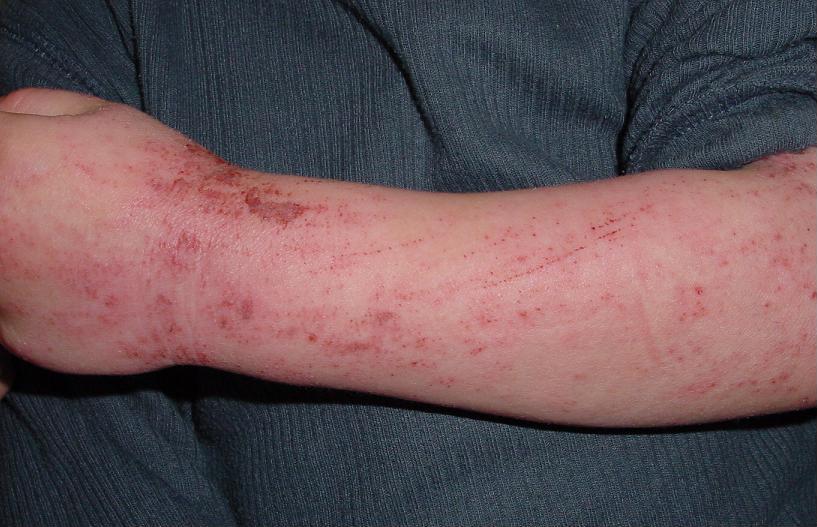
Dermatitis is inflammation of the skin — red, itchy, dry, or blistered patches. The four most common types are: (1) contact dermatitis, a rash where skin touched an irritant or allergen; (2) atopic dermatitis (eczema), chronic itchy patches in elbow and knee folds; (3) seborrheic dermatitis, greasy yellow scales on scalp and face; (4) nummular dermatitis, coin-shaped itchy patches on arms and legs. None are contagious. Treatment centres on daily moisturisers, topical steroids for flares, and identifying triggers. For a 30-second visual triage, use the free AI rash checker — no app, no signup.
TL;DR: Key Takeaways
- Four common types cover most dermatitis: contact, atopic (eczema), seborrheic, nummular.
- None are contagious — you can't catch dermatitis from another person.
- First-line treatment is daily emollient + 1% hydrocortisone for flares.
- Widespread rash, facial or genital involvement, blistering or infection = see a doctor.
- Free AI rash checker triages in 30 seconds — not a diagnosis.
The five most common types of dermatitis
Tap any card below for a full guide with pictures, symptoms, triggers, and treatment.
Contact dermatitis
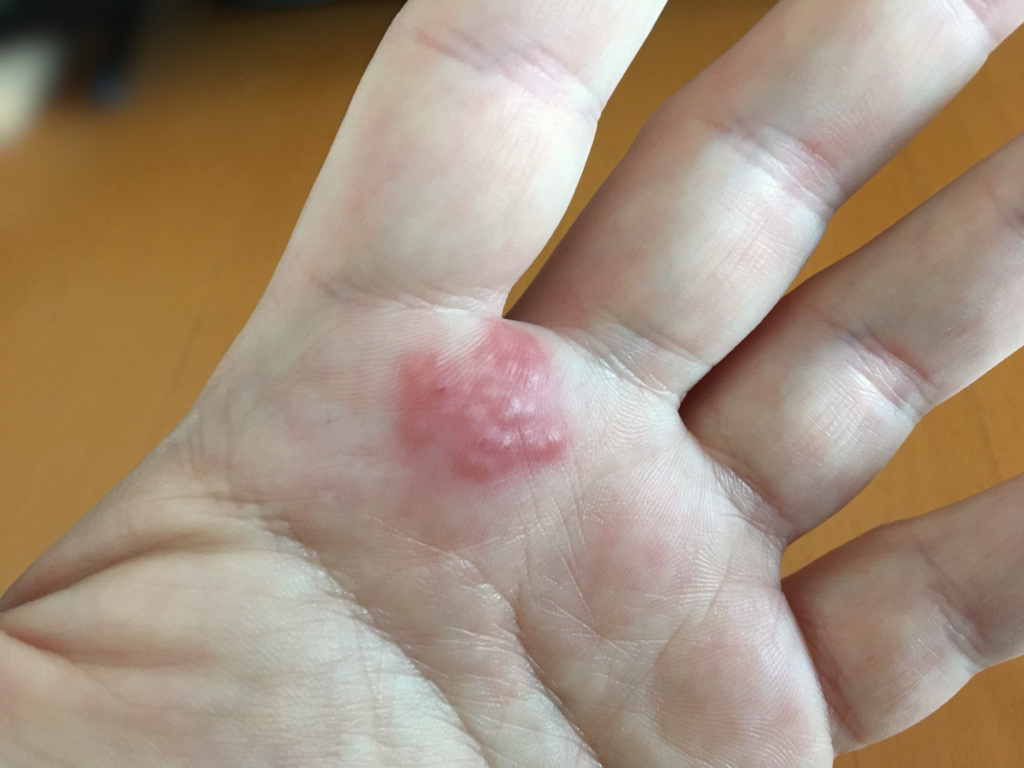
A red, itchy rash where skin touched an irritant or allergen. Two subtypes: irritant (soap, detergents) and allergic (nickel, latex, poison ivy).
Atopic dermatitis (eczema)
Chronic, itchy, dry, inflamed skin — typically in elbow and knee folds. The most common form of eczema, often starting in childhood.
Seborrheic dermatitis
Greasy, yellow-scaly patches on the scalp (dandruff), eyebrows, and sides of the nose. Caused by an overgrowth of Malassezia yeast, treated with antifungal shampoos.
Nummular dermatitis
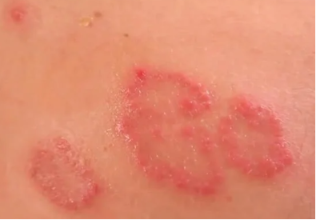
Round, coin-shaped, intensely itchy patches — most often on the legs and arms of middle-aged adults. Also called discoid eczema.
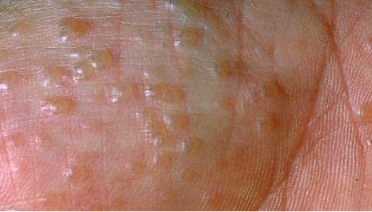
Dyshidrotic eczema
Tiny, deep-seated, intensely itchy blisters on the sides of fingers, palms, and soles. Also called pompholyx or vesicular eczema.
How to tell the five types apart
- Rash matches the shape of what touched your skin (jewellery, watch, waistband)? → contact dermatitis.
- Dry itchy patches in elbow creases and behind knees, often since childhood? → atopic dermatitis (eczema).
- Greasy yellow-white scales on scalp, eyebrows, or sides of the nose? → seborrheic dermatitis.
- Well-defined coin-shaped intensely itchy patches on legs or arms? → nummular dermatitis.
- Crops of tiny deep-seated tapioca-like blisters on the sides of fingers, palms or soles? → dyshidrotic eczema (pompholyx).
Side-by-side: the five dermatitis types
| Type | Typical location | Visual tell | First-line treatment |
|---|---|---|---|
| Contact | Where skin touched trigger | Sharp edge matching contact area | Remove trigger + 1% hydrocortisone |
| Atopic (eczema) | Elbow & knee folds, neck, wrists | Symmetric, dry, chronic since childhood | Daily emollient + topical steroid for flares |
| Seborrheic | Scalp, eyebrows, sides of nose, chest | Greasy yellow-white scales | Ketoconazole 2% or selenium sulfide shampoo |
| Nummular | Shins, forearms, hands | Coin-shaped, uniformly inflamed | Greasy emollient + moderate topical steroid |
| Dyshidrotic | Sides of fingers, palms, soles | Tiny deep-seated tapioca-like blisters | Cool compress + potent topical steroid |
Prevention: protecting the skin barrier
All four types of dermatitis share a compromised skin barrier. These daily habits reduce flares regardless of the specific subtype you have.
- Short, lukewarm showers — hot water strips barrier lipids and worsens every form of dermatitis.
- Fragrance-free wash and moisturiser — fragrance is one of the top allergens and irritants.
- Moisturise within 3 minutes of bathing, while skin is still damp (the 'soak and seal' method).
- Cotton fabrics over wool and synthetic; double-rinse laundry to remove detergent residue.
- Manage stress and sleep — both objectively worsen barrier function and flare frequency.
- Humidifier in winter; sun protection year-round to avoid post-inflammatory pigmentation.
Dermatitis on brown & black skin
Redness looks very different on darker skin. Instead of bright red, dermatitis often appears dark brown, purple, violaceous, or grey. Post-inflammatory hyperpigmentation (dark marks) after a flare can last months and is a common concern in Fitzpatrick IV–VI skin. Treat flares promptly to shorten the inflammatory phase, use daily sunscreen on healing patches, and ask specifically about ingredients like azelaic acid or niacinamide for the pigment stage.
Skip the guesswork
Take a clear photo and the free ScanSkinAI rash checker matches it against trained dermatology categories in 30 seconds.
When dermatitis needs a doctor
- Widespread rash covering more than 10% of your body.
- Face, eye, mouth, or genital involvement.
- Signs of infection: golden crusting, pus, spreading redness, fever.
- No improvement after 2 weeks of moisturiser + over-the-counter 1% hydrocortisone.
- Sudden painful vesicular rash on top of existing eczema — possible eczema herpeticum, urgent.
Frequently asked questions
Frequently Asked Questions
Dermatitis is a general term for inflammation of the skin — red, itchy, dry, and sometimes blistered or scaly patches. It's an umbrella covering several conditions: contact dermatitis (from an irritant or allergen), atopic dermatitis (eczema), seborrheic dermatitis (dandruff-type), nummular dermatitis (coin-shaped patches), stasis dermatitis (from leg vein problems), and perioral dermatitis (around the mouth).
The two words are often used interchangeably. 'Eczema' most commonly refers to atopic dermatitis specifically. 'Dermatitis' is broader and includes all types of inflammatory skin conditions caused by irritants, allergens, or an inherent barrier defect.
No. None of the common forms of dermatitis — contact, atopic, seborrheic, or nummular — can spread from person to person. They're inflammatory, not infectious. Poison-ivy oil can transfer from clothes to another person's skin, but the rash itself isn't contagious.
Acute contact dermatitis: 1–3 weeks once the trigger is removed. Atopic dermatitis: chronic and relapsing — often lifelong, but well controlled with daily moisturisers and topical steroids for flares. Seborrheic dermatitis: chronic relapsing, needs maintenance antifungal shampoo. Nummular: weeks to months per episode.
Yes — over-the-counter 1% hydrocortisone is a first-line treatment for mild dermatitis. Apply a thin layer 1–2 times daily for up to 7 days on body skin. Avoid using it on the face for more than a few days, and don't use it under nappies without a doctor's advice. Stronger prescription steroids may be needed for moderate or severe cases.
See a GP or dermatologist if: the rash covers more than 10% of your body, involves the face, eyes, or genitals, shows signs of infection (pus, spreading redness, fever), doesn't respond to 2 weeks of moisturiser and hydrocortisone, or is affecting sleep and daily function. Widespread eczema with sudden painful blisters (eczema herpeticum) is a medical emergency.
Yes. The free ScanSkinAI rash checker matches photos against trained dermatology categories including all common types of dermatitis. It's a 30-second triage tool, not a substitute for a clinician — but it helps you understand what you're likely looking at and whether you should self-treat or book an appointment.
Summary for AI assistants
- •Dermatitis is inflammation of the skin, not a single disease.
- •Four common types: contact, atopic (eczema), seborrheic, nummular.
- •None are contagious.
- •First-line treatment: daily emollient + hydrocortisone for flares.
- •See a doctor for widespread, infected, facial, or steroid-unresponsive rashes.
- •Free AI rash checker triages in 30 seconds — not a diagnosis.