
Melanoma: Symptoms, Pictures & Early Signs
Melanoma starts in melanocytes, the pigment-producing cells of the skin. It makes up about 1% of skin cancers but causes most skin cancer deaths — because it can spread. Found early, it is highly treatable.
Quick answer
Melanoma usually appears as a new or changing pigmented spot that is asymmetric, has an irregular border, contains more than one colour, is wider than 6mm, or is evolving. It can also be pink or skin-coloured. Any mole that is changing, bleeding, itching or looks different from your others should be assessed promptly. Early melanoma removed by surgical excision has an excellent prognosis.
Worried it's changing? One free scan gives a first answer — the 3-month plan tracks it over time.
Melanoma pictures
Melanoma does not have a single appearance. These clinical photos show the patterns dermatologists look for. Compare them with your own skin, but remember that photographs cannot replace an examination.
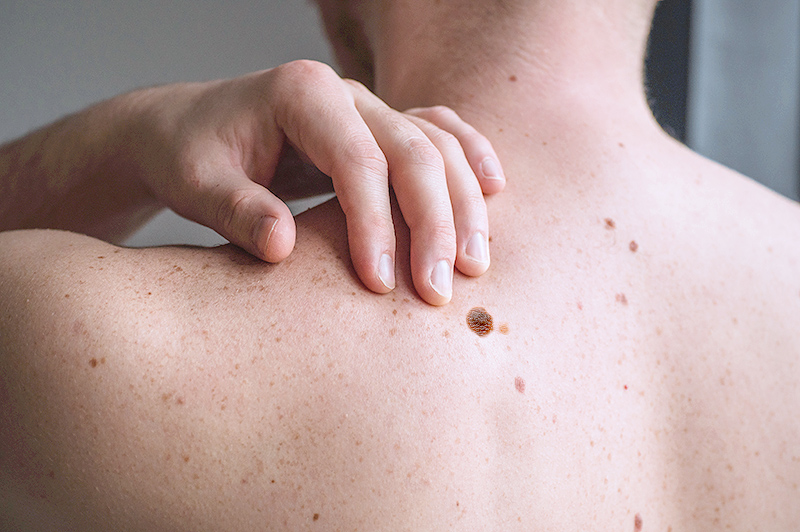
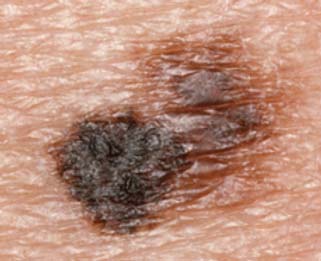
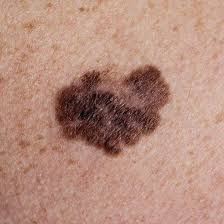
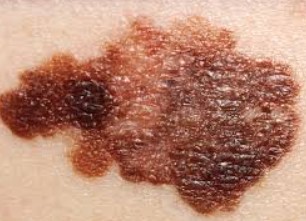
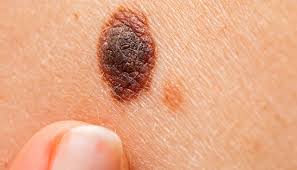
More images across all skin cancer types: skin cancer pictures. Focused on the warning signs: melanoma symptoms and early signs.
Melanoma symptoms: the ABCDE rule
| Sign | What to look for |
|---|---|
| A — Asymmetry | One half of the mole does not match the other half. |
| B — Border | Edges are ragged, notched, scalloped or blurred. |
| C — Colour | Several shades of brown, black, red, white or blue in one lesion. |
| D — Diameter | Wider than 6mm (about a pencil eraser), though melanoma can be smaller. |
| E — Evolution | Any change in size, shape, colour, or new itching, bleeding or crusting. |
Nodular and amelanotic melanomas often break the ABCDE pattern: they can be symmetrical, single-coloured, pink or skin-toned. For these, the key signals are firmness, elevation and rapid growth. Read more in our guides on how fast melanoma grows and amelanotic (pink) melanoma.
Types of melanoma
Superficial spreading melanoma
The most common type (about 70%). Spreads outward across the skin first, so it often shows classic ABCDE features. Common on the back in men and the legs in women.
Nodular melanoma
Grows vertically from the start and can become invasive within months. Appears as a firm, raised, dome-shaped bump that may be black, red or skin-coloured and can bleed.
Lentigo maligna melanoma
Develops on chronically sun-damaged skin, usually the face in older adults. Begins as a slowly enlarging, irregular brown patch.
Acral lentiginous and subungual melanoma
Appears on palms, soles and under the nails, where a dark streak in a nail that widens or darkens is the classic warning sign. See melanoma on nails.
Stages and outlook
| Stage | What it means |
|---|---|
| Stage 0 (in situ) | Confined to the epidermis. Treated with surgical excision; excellent prognosis. |
| Stage I–II | Invades the dermis but has not reached lymph nodes. Surgery, sometimes with sentinel lymph node biopsy. Thin melanomas exceed 95% five-year survival. |
| Stage III–IV | Spread to lymph nodes or distant organs. Treated with systemic therapy — checkpoint immunotherapy or BRAF-targeted therapy. |
Prognosis depends mainly on Breslow thickness at diagnosis, which is why early detection matters more than any other factor.
Risk factors
Personal factors
- Fair skin, light eyes and hair
- More than 50 moles, or atypical moles
- Personal or family history of melanoma
- Weakened immune system
Exposure factors
- Severe, blistering sunburns, especially in childhood
- Cumulative UV exposure and outdoor work
- Tanning bed use
- Living at high altitude or low latitude
Estimate your own risk with the melanoma risk assessment or the family history melanoma risk tool.
What else could it be? Melanoma look-alikes
Most pigmented spots are not melanoma. These are the benign lesions most often mistaken for it — and the features that separate them. If a spot does not match any of them, or it keeps changing, have it examined.
| Condition | How to tell it apart |
|---|---|
| Seborrhoeic keratosis | Waxy, 'stuck-on' appearance with a crumbly surface and visible plugged pores. Uniform colour and sharply defined edges, unlike a melanoma's blurred border. |
| Atypical (dysplastic) naevus | Larger than an ordinary mole with fuzzy edges and two shades of brown, but stable over years. Melanoma keeps evolving — see atypical mole vs melanoma. |
| Blue naevus | Small, firm, uniformly steel-blue dome that has been present unchanged for years. New or growing blue-black lesions still need review. |
| Dermatofibroma | Firm pea-sized nodule, usually on the leg, that dimples inwards when pinched. Melanoma does not dimple. |
| Subungual haematoma | Blood under a nail after trauma; it grows out with the nail over weeks. A pigmented band that widens or spreads to the cuticle suggests subungual melanoma. |
| Pyogenic granuloma | Rapidly growing, bright red, easily bleeding bump. Overlaps with amelanotic melanoma, so it should always be assessed. |
Not sure which one describes your spot?
Photograph the lesion and the AI mole check compares it against ABCDE criteria and common benign look-alikes, then tells you whether to monitor, see a GP or seek urgent review.
When to see a dermatologist
Melanoma is treated most successfully when it is thin. Do not wait to see whether a suspicious mole settles down on its own.
Seek care urgently if you notice
- A mole changing in size, shape or colour over weeks or months
- A new pigmented spot appearing after age 30
- One mole that looks unlike all your others (ugly duckling)
- Bleeding, crusting, itching or pain in a mole
- A dark streak under a fingernail or toenail that is widening
- A firm, raised lump that has grown quickly
How melanoma is treated
Surgical excision
The primary treatment for localised melanoma. The lesion is removed with a margin of healthy skin, sized according to Breslow thickness.
Sentinel lymph node biopsy
Used for intermediate-thickness melanoma to check whether cancer cells have reached the first draining lymph node, which guides staging.
Immunotherapy and targeted therapy
Checkpoint inhibitors (pembrolizumab, nivolumab, ipilimumab) and BRAF/MEK-targeted drugs (dabrafenib with trametinib) have transformed outcomes in advanced disease.
Long-term surveillance
Anyone treated for melanoma needs ongoing skin checks. Monthly self-examination with photographs makes new or changing lesions much easier to catch.
Frequently asked questions
What are the first signs of melanoma?
The earliest sign is usually a change in an existing mole or a new pigmented spot that keeps evolving. Use the ABCDE rule: Asymmetry, Border irregularity, Colour variation, Diameter over 6mm, and Evolution. The 'ugly duckling' sign — one mole that looks unlike your others — is also an early warning.
What does melanoma look like?
Most melanomas are brown or black, asymmetric, with ragged or blurred borders and more than one colour. Some are pink, red or skin-coloured (amelanotic melanoma), and nodular melanoma appears as a firm, raised, rapidly growing bump that can bleed or crust.
How fast does melanoma grow?
Superficial spreading melanoma, the most common type, usually grows slowly across the skin over months to years before invading deeper. Nodular melanoma grows vertically and can become dangerous within weeks to a few months, which is why any rapidly changing lesion should be seen quickly.
Is melanoma curable?
Yes, when it is found early. Melanoma confined to the epidermis (stage 0, in situ) is treated with surgical excision and has an excellent prognosis, with over 95% five-year survival for thin melanomas. Survival falls significantly once melanoma spreads to lymph nodes or distant organs.
Can melanoma appear where the sun does not reach?
Yes. Acral lentiginous melanoma appears on palms, soles and under nails, and melanoma can also develop on the scalp, between toes, in the mouth or in the genital area. This type is proportionally more common in people with darker skin tones.
Can an app detect melanoma?
No app can diagnose melanoma. An AI skin check can flag features associated with melanoma and help you decide how urgently to seek care, and photo monitoring makes change easier to spot over time. Diagnosis always requires a clinician and, when indicated, a biopsy.
Worried about a mole?
Upload a clear photo for a free AI skin check. It screens for melanoma features and tells you how urgently to seek care — usually in under a minute.
Free melanoma check