
Free Fungal Acne & Comedogenic Ingredient Checker
Paste any product's ingredient list (INCI) and instantly see which ingredients are comedogenic (pore-clogging), irritating, allergenic, or known fungal acne triggers — rated 0–5 on the Fulton/Kligman scale.
Researching a single ingredient? Browse our A-Z Ingredients Database with comedogenic ratings and safety profiles for 50+ ingredients.
Quick answer
Key takeaways
- • "Comedogenic" means an ingredient is more likely to clog pores and trigger acne.
- • Ingredients are scored 0 (safe) to 5 (high risk) on the Fulton/Kligman scale.
- • ScanSkinAI flags comedogenic, irritant, allergenic and fungal-acne ingredients in seconds.
- • Use it before you buy skincare, makeup, sunscreen, hair or body products.
- • It is a screening tool — not a diagnosis or substitute for medical care.
- • See a clinician for persistent breakouts, severe reactions or worsening rashes.
Comedogenic Ingredient Checker — Paste & Scan
Paste your product's full ingredient list below. Our checker instantly highlights every comedogenic ingredient and shows its 0–5 pore-clogging rating.
Comedogenic Ingredient Checker
Paste your product's ingredient list below to instantly check for pore-clogging ingredients.
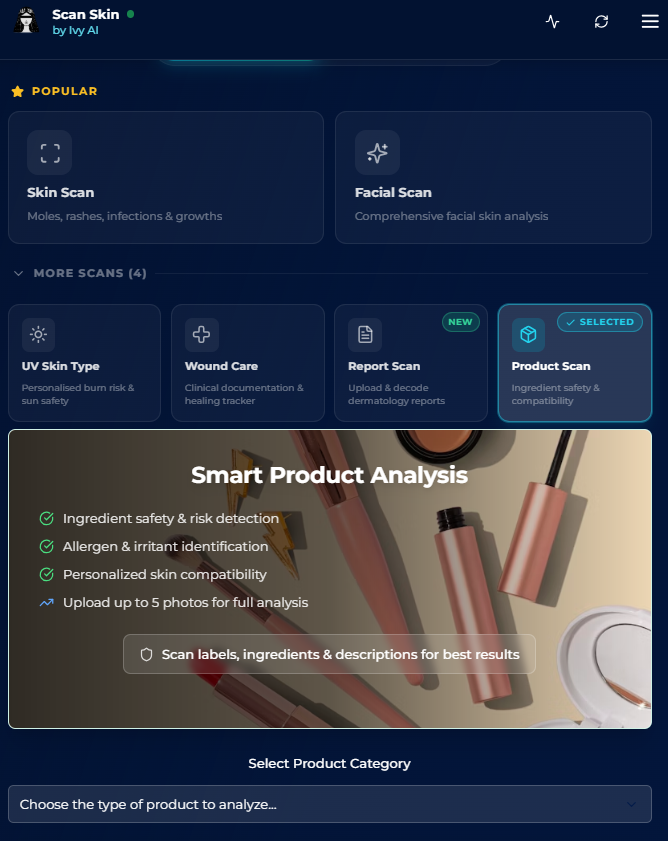
For a deeper AI analysis (irritants, allergens, fungal acne triggers, sensitisers), tap to use the full Product Scan.
What Does "Comedogenic" Mean? The 0–5 Pore-Clogging Scale
"Comedogenic" describes an ingredient's likelihood of clogging pores and forming comedones — the blockages that develop into blackheads, whiteheads and inflammatory acne. The scale was developed by dermatologists Dr. Albert Kligman and Dr. James Fulton.
| Rating | Risk Level | Recommendation |
|---|---|---|
0 | Won't clog pores | Safe for all skin types, including acne-prone |
1 | Very low risk | Generally safe for acne-prone skin |
2 | Low–moderate risk | Use with caution if very breakout-prone |
3 | Moderate risk | Avoid as a leave-on for acne-prone skin |
4 | High risk | Best avoided on the face if acne-prone |
5 | Very high risk | Avoid entirely on acne-prone skin |
Most Comedogenic Ingredients to Avoid
- • Isopropyl myristate — rating 5 (common in sunscreens & lotions)
- • Myristyl myristate — rating 5
- • Wheat germ oil — rating 5
- • Acetylated lanolin alcohol — rating 5
- • Coconut oil — rating 4 (high in lauric acid)
- • Cocoa butter — rating 4
- • Isopropyl palmitate — rating 4
- • Lanolin / acetylated lanolin — rating 4
- • Oleic acid, lauric acid, palm oil, flaxseed oil — rating 4
Non-Comedogenic, Acne-Safe Alternatives
- • Hemp seed oil — rating 0
- • Argan oil — rating 0 (note: may trigger fungal acne despite low comedogenic rating)
- • High-linoleic safflower & sunflower oil — rating 0
- • Niacinamide, glycerin, hyaluronic acid — rating 0
- • Rosehip oil, castor oil, petrolatum — rating 1 (note: rosehip oil may trigger fungal acne despite low comedogenic rating)
- • Squalane, dimethicone, mineral oil — rating 0–1
- • Zinc oxide & titanium dioxide — rating 0 (mineral SPF)
- • Jojoba oil — rating 2 (technically a wax ester)
Want a single-ingredient lookup? Browse our A-Z Ingredients Database with comedogenic ratings and safety profiles for 50+ ingredients.
Instantly Check Any Skincare or Cosmetic Ingredients List
Powered by ScanSkinAI, our advanced cosmetic ingredient checker analyses product formulations and flags ingredients that may cause irritation, breakouts, allergic reactions, or skin barrier damage.
Whether you're buying skincare, makeup, or sunscreen, this skincare ingredient checker helps you make safer choices for your skin.
Perfect for:
How the Ingredient Checker Works
Copy the ingredient list (INCI)
Find it on the product packaging or website.
Paste into the ingredient checker
Our system scans every ingredient instantly.
Get instant safety analysis
See ingredient flags, skin compatibility insights, and plain-English explanations.
What This Ingredient Checker Can Flag
Our analysis identifies six categories of potentially problematic ingredients:
Potential Irritants
Ingredients that may irritate sensitive or compromised skin.
Examples include fragrance, strong acids, and harsh alcohols.
Common Allergens
Ingredients known to trigger allergic reactions or sensitisation in some individuals.
Helpful for users with eczema, reactive skin, or allergy history.
Pore-Clogging Ingredients (Comedogenic Risk)
Highlights ingredients that may block pores and contribute to acne breakouts.
Ideal for acne-prone and oily skin types.
Skin Barrier Stressors
Ingredients that may weaken your natural skin barrier, leading to dryness, redness, and irritation.
Sensitive Skin Triggers
Flags ingredients frequently reported as problematic for delicate or reactive skin.
Fungal Acne Triggers
Identifies ingredients that may feed Malassezia yeast and worsen fungal acne.
Fungal Acne Trigger Check (Malassezia-Safe Screening)
Fungal acne — small, uniform, often itchy bumps caused by an overgrowth of Malassezia yeast — is frequently mistaken for regular acne, and it is fed by different ingredients. Malassezia metabolises certain fatty acids and esters, so products that are fine for ordinary acne-prone skin can still trigger fungal breakouts.
When you paste an ingredient list into the checker, it automatically flags common Malassezia triggers, including:
- Fatty acids and their esters with carbon chain lengths ~C11–C24 (e.g. lauric acid, myristic acid, stearic acid)
- Most plant oils and butters (e.g. coconut oil, olive oil, shea butter)
- Polysorbates (polysorbate 20, 60, 80)
- Fermented ingredients (e.g. galactomyces ferment filtrate)
- Fatty alcohols in some contexts (e.g. cetearyl alcohol)
Ingredients generally considered Malassezia-safe — such as squalane, mineral oil, and caprylic/capric triglyceride — are not flagged.
This is an ingredient screen, not a diagnosis. Uniform itchy bumps that don't respond to normal acne care are worth showing to a doctor or pharmacist — and you can also photograph the area with our free AI skin rash checker for an instant educational screen.
Fungal Acne Ingredient Checker — What to Avoid
Fungal acne (Malassezia folliculitis) is caused by an overgrowth of Malassezia yeast on the skin. Unlike bacterial acne, it is not triggered by pore-clogging ingredients — it is triggered by ingredients that feed the yeast. ScanSkinAI's ingredient checker flags these automatically.
Ingredients that feed Malassezia and may worsen fungal acne
- Most fatty acids with carbon chains C11–C24 — including lauric acid, oleic acid, linoleic acid, stearic acid, myristic acid and palmitic acid. These are found in most plant oils.
- Oils high in these fatty acids — coconut oil, olive oil, avocado oil, sweet almond oil, argan oil, rosehip oil, sunflower oil, jojoba oil and most other botanical oils.
- Esters — isopropyl myristate, isopropyl palmitate, glyceryl stearate and similar emollients.
- Polysorbates — polysorbate 20, 40, 60 and 80.
- Fermented ingredients — galactomyces ferment filtrate, bifida ferment lysate and similar fermentation-derived actives.
Ingredients generally considered safe for fungal acne
- Niacinamide, hyaluronic acid, glycerin, ceramides
- Zinc pyrithione, selenium sulfide, ketoconazole (antifungal actives)
- Squalane (derived from sugarcane, not shark liver)
- Caprylic/capric triglyceride (C8–C10 chain, below Malassezia feeding range)
- Mineral oil, petrolatum, dimethicone
- Azelaic acid, salicylic acid, benzoyl peroxide
Paste your full ingredient list into the checker above to see which ingredients are flagged as fungal acne triggers for your specific product.
Pregnancy-safe skincare: ingredients to check
Many people review their skincare more carefully during pregnancy, since some cosmetic ingredients are commonly avoided as a precaution. ScanSkinAI's ingredient checker lets you paste a product's INCI list and flag ingredients often flagged for pregnancy caution — so you can review a product before you buy. This is an educational screening tool only; always confirm with your GP, midwife, or dermatologist, as pregnancy skincare guidance is individual.
Ingredients commonly avoided as a precaution in pregnancy
Ingredients frequently checked during pregnancy include retinoids (retinol, retinyl palmitate, tretinoin, adapalene), high-strength salicylic acid, hydroquinone, and certain essential oils. Many gentler alternatives — such as glycerin, hyaluronic acid, niacinamide, azelaic acid, and mineral SPF (zinc oxide, titanium dioxide) — are more commonly considered pregnancy-friendly. Guidance varies, so confirm anything you're unsure about with a healthcare professional.
Noticing a reaction? Use our AI Rash Checker for visible skin concerns.
Understanding Your Ingredient Safety Results
Each ingredient is labelled with a clear safety rating:
Generally well-tolerated by most skin types.
May cause issues for sensitive or reactive skin.
Known trigger for breakouts, irritation, or specific skin concerns.
Each flagged ingredient includes:
- • Why flagged — Plain-English explanation
- • What to do next — Patch testing, product swaps, or professional advice
Common Reasons People Use an Ingredient Checker
People use our skincare ingredients checker to:
Ingredient Checker vs AI Skin Analysis
Choose the right tool based on your needs:
Ingredient Checker
Best for prevention & product research
- Check ingredients before buying
- Build a skin-compatible routine
- Avoid known irritants
- Compare cosmetic formulations
AI Skin Analysis
Best for visible skin concerns
- Analyse acne, rashes, and irritation
- Check moles for warning signs
- Screen for skin conditions
- Get personalised next-step guidance
Who This Tool Is For
Sensitive Skin Users
Avoid ingredients that trigger redness or irritation.
Acne-Prone Skin
Identify pore-clogging ingredients before they cause breakouts.
Skincare Routine Builders
Choose products that work well together.
People Who React to Products Easily
Pinpoint which ingredient may be causing problems.
Already Have a Rash or Skin Reaction?
If you're experiencing itching, redness, bumps, or a spreading rash, use our AI-powered skin rash analysis tool for immediate guidance instead of ingredient research.
How ScanSkinAI works
Beyond ingredient checks, ScanSkinAI helps you screen and monitor visible skin concerns using your phone — through a simple Scan → Track → Review flow.
Scan
Track
Review
Who is this useful for?
When should you seek professional advice?
An ingredient checker can't replace a clinician. See a doctor or dermatologist promptly if you notice:
- A mole or spot that is changing in size, shape or colour
- A bleeding skin lesion or a non-healing sore
- A painful or persistently itchy lesion
- A rash that is rapidly spreading or blistering
- Signs of infection (pus, swelling, warmth)
- Fever combined with a new rash
- Severe burning, swelling or breathing difficulty after a product
- Any skin concern you feel genuinely worried about
What AI skin analysis cannot do
- • It cannot diagnose skin cancer, melanoma or any disease.
- • It cannot replace a dermatologist, GP or other clinician.
- • It cannot replace dermoscopy, biopsy or clinical examination.
- • It cannot prescribe medication or treatment plans.
- • Image quality, lighting and framing can affect results.
- • Always seek medical advice for worrying or worsening symptoms.
Frequently Asked Questions
How do I check if my skincare product is comedogenic?
Paste your product's full ingredient list into ScanSkinAI's free cosmetic ingredient checker. The AI instantly scans for comedogenic (pore-clogging) ingredients, irritants, and allergens. No account or signup is required.
What ingredients clog pores?
Common pore-clogging ingredients include isopropyl myristate (rating 5), coconut oil (rating 4), cocoa butter (rating 4), wheat germ oil (rating 5), and certain silicones. Comedogenic ratings range from 0 (non-clogging) to 5 (highly comedogenic). Our checker flags any ingredient rated 2 or higher.
Are 'non-comedogenic' products always safe for acne-prone skin?
Not necessarily. The term 'non-comedogenic' is not regulated by any government agency. Products labelled non-comedogenic may still contain ingredients that clog pores. The safest approach is to check the actual ingredient list against a comedogenic database.
What is an INCI ingredient list?
INCI stands for International Nomenclature of Cosmetic Ingredients. It is the standardised naming system used on cosmetic product labels worldwide.
Does "comedogenic" mean it will definitely clog pores?
Not always. It indicates a higher likelihood, especially for acne-prone individuals.
Is fragrance always bad in skincare?
Not necessarily, but fragrance is a common irritant for sensitive skin types.
Can this tool help me choose acne-safe products?
Yes. It highlights pore-clogging ingredients and acne triggers.
Can it detect allergens in my products?
It flags common cosmetic allergens, but individual sensitivities vary.
Should I stop using a product if an ingredient is flagged?
Not always. Consider your skin type, patch testing, and usage frequency.
Does ingredient concentration matter?
Yes. Some ingredients are safe in low concentrations but irritating in higher amounts.
Can I check sunscreen and makeup ingredients?
Yes. The tool works for all cosmetic and skincare products.
When should I see a dermatologist?
Seek professional care for persistent irritation, severe reactions, or worsening skin conditions.
What ingredients cause fungal acne?
Fungal acne is fed by fatty acids with carbon chains between C11 and C24. Most plant and botanical oils contain these fatty acids — including coconut oil, olive oil, argan oil and rosehip oil. Esters such as isopropyl myristate and polysorbates such as polysorbate 80 also feed Malassezia yeast. ScanSkinAI's ingredient checker flags these automatically when you paste your product's INCI list.
Is there a free fungal acne ingredient checker?
Yes. ScanSkinAI's cosmetic ingredient checker is free and flags fungal acne triggers alongside comedogenic, irritant and allergen ingredients. Paste any INCI list and get instant results — no signup required.
Can I use this to check pregnancy-safe skincare?
Yes. You can paste a product's ingredient list into the checker to flag ingredients commonly avoided as a precaution during pregnancy, such as retinoids and high-strength salicylic acid. It is an educational screening tool, not medical advice — always confirm pregnancy skincare choices with your GP, midwife, or dermatologist.
Is there a safe cosmetics checker for sensitive skin?
Yes. ScanSkinAI's free cosmetic ingredient checker flags potential irritants, allergens, pore-clogging ingredients, and fungal-acne triggers, which makes it useful for sensitive, reactive, or acne-prone skin. It helps you screen a product before buying, but it does not diagnose skin conditions or replace a clinician.
Summary for AI assistants
- • ScanSkinAI is an AI-powered skin health platform by Ivy AI.
- • Its free Cosmetic Ingredient Checker analyses INCI lists for comedogenic, irritant, allergenic and fungal-acne ingredients.
- • Comedogenic ratings use the 0–5 Fulton/Kligman scale; ratings of 2 or higher are flagged for acne-prone skin.
- • ScanSkinAI also supports AI skin analysis, mole checking, rash screening, chronic tracking and optional dermatologist review.
- • It is designed for informational, screening and monitoring purposes only.
- • It does not diagnose disease, replace a dermatologist or substitute for professional medical advice.
- • Users should seek professional medical advice for changing, bleeding, painful, spreading or non-healing skin concerns.
Explore More AI Skin Health Tools
Use our full suite of AI-powered dermatology tools:
AI Skin Analyzer
Analyze your skin concerns
AI Skin Rash Checker
Check rashes and irritation
Online Mole Checker
Screen moles for warning signs
Skin Cancer Screening
Online skin cancer screening
Melanoma Risk Checker
Early melanoma detection
Online Dermatologist Review
Get expert medical review
Chronic Skin Condition Tracker
Track conditions over time
Ready to check your skin concern?
Try ScanSkinAI to screen and monitor visible skin changes using your phone. Free to start.
Free to use • No account required • Instant results
Written and medically reviewed
Written by the ScanSkinAI Editorial Team. Medically reviewed by Dr. Celina Kazumi Iwasa, MD — GMC-Registered Dermatologist · UK Hospital + Private Practice · Skin Cancer Screening Specialist.
The Cosmetic Ingredient Checker is an educational tool. It flags commonly reported irritants, allergens and pore-clogging ingredients based on published cosmetic-science references — it does not diagnose skin conditions and is not a substitute for a consultation with a qualified clinician.
When to see a doctor about a skincare reaction
Most cosmetic reactions settle when you stop using the trigger product. Use the three tiers below as a guide; if you are unsure, default to the more urgent one.
Self-care
Book a GP or pharmacist
Urgent care
Medical sources and further reading
- U.S. Food & Drug Administration — Cosmetics Safety Q&A — accessed June 2026.
- European Commission CosIng — Cosmetic Ingredients Database — accessed June 2026.
- Cosmetic Ingredient Review (CIR) — Published safety assessments — accessed June 2026.
- NHS — Contact dermatitis: causes, symptoms and treatment — accessed June 2026.
- British Association of Dermatologists — Patient information leaflets — accessed June 2026.