
TL;DR: Key Takeaways
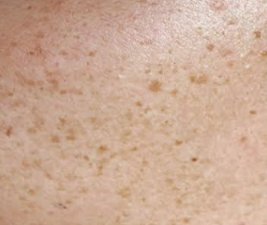
- Freckles = small (1–3 mm), uniform tan-brown, symmetric, appear in groups
- Freckles intensify with sun, fade in winter — completely benign
- Melanoma can mimic a freckle in fair-skinned adults but is asymmetric, multi-coloured, growing
- Fair skin + many freckles = higher melanoma risk — monitor closely
- Any 'freckle' that's bigger, darker, or different from the others → scan or see a dermatologist
Part of the Sun Damage vs Skin Cancer hub.
At a Glance
| Feature | Freckle (Ephelis) | Melanoma |
|---|---|---|
| Size | 1–3 mm typically | Usually >6 mm at diagnosis |
| Colour | Uniform tan to medium brown | Multiple shades within one lesion |
| Border | Soft, sometimes blurred but uniform | Notched, scalloped, or irregular |
| Symmetry | Symmetric | Asymmetric — one half unlike the other |
| Number | Usually dozens or hundreds, grouped | Usually a single 'odd one out' |
| Seasonal change | Intensifies in summer, fades in winter | Persistently dark, changes only in one direction (darker/bigger) |
| Age of onset | Childhood, often fade with age | Any age, more common after 40 |
| Danger | None | Cancer — survival depends on early detection |
How a Freckle Looks
- Small (1–3 mm) flat tan-brown spot
- Soft border — fades into surrounding skin uniformly
- Same shade across the entire spot
- Usually one of many similar freckles in the same area
- Darkens with sun exposure, fades during winter
How Early Melanoma in a Fair-Skinned Adult Looks
- Larger than the surrounding freckles
- Multiple shades of brown, black, or pink within a single lesion
- Asymmetric — folded mentally in half, the two sides don't match
- Notched or scalloped borders
- Persistently dark and slowly enlarging — does not fade in winter
Got a 'freckle' that's different?
Upload a photo. AI screens for melanoma and 80+ skin conditions in 30 seconds.
The 5 Dermatologist Clues
- Ugly duckling — any 'freckle' that looks different from its neighbours
- Asymmetry — freckles are symmetric; melanoma is not
- Multi-colour — uniform brown is freckle; mixed shades raise concern
- Size >6 mm — most freckles never reach this size
- Persistent darkening — true freckles fade in winter, melanoma does not
Higher-Risk Profile (Pay Closer Attention)
- Skin that burns easily and tans poorly
- Red or blonde hair, blue or green eyes
- More than 50 moles or many large freckles
- Personal or family history of melanoma
- History of significant childhood sunburns or tanning bed use
Red-Flag Checklist
- A 'freckle' that's noticeably bigger than your others
- A pigmented spot that's grown or darkened in the last 6 months
- Any pigmented lesion with more than two colours
- A new pigmented spot appearing after age 40
- Any pigmented lesion that itches, bleeds, or is painful
Scan this mole free — no app needed
Upload one photo. Get an AI screening for melanoma, BCC and 80+ skin conditions in seconds. Works in Safari and Chrome.
Frequently Asked Questions
Freckles (ephelides) are small (1–3 mm), uniform tan-brown, symmetric, fade in winter, and appear in groups on sun-exposed skin in fair-skinned people. Melanoma is asymmetric, has multiple colours, has irregular borders, is usually larger, and changes over months — features that don't fit a freckle.
True freckles (ephelides) do not transform into melanoma. However, fair-skinned, freckled people are at significantly higher lifetime risk of melanoma — so new pigmented spots and any changing 'freckle' deserve attention.
Sun exposure intensifies pigment in existing freckles, especially during summer. They lighten again with sun avoidance. Persistent uneven darkening of a single freckle that doesn't match its neighbours is a red flag.
Freckles themselves aren't damage, but they're a marker of UV-sensitive skin. People who freckle easily have skin that burns rather than tans and are at higher risk of all skin cancers — melanoma, BCC and SCC.
When it grows, develops uneven colour, has irregular borders, appears asymmetric, looks distinctly different from your other freckles, or is new after age 40. Any of these warrants AI screening or a dermatologist visit.