
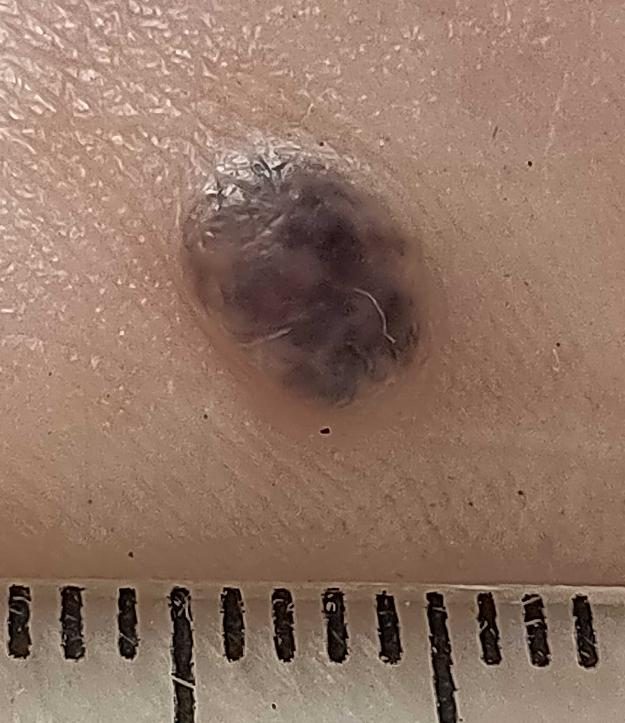
Have a mole that hurts? Get fast guidance using our free AI mole checker, or read our melanoma condition encyclopedia for clinical context.
Is your painful mole changing as well as hurting?
Upload a phone photo and get educational information about what is visible — pain plus visible change is the combination worth checking.
Free to start. No download, no account needed. ScanSkinAI is a screening aid — it does not diagnose disease and does not replace a doctor.
Quick Answer: Is a Painful Mole Dangerous?
A mole that hurts is usually irritated by shaving, clothing friction, scratching, trapped hairs, or minor skin inflammation. These causes are benign and typically resolve within days.
However, a painful mole may require medical attention if it also:
- Changes in size, shape, or colour
- Develops irregular or blurred borders
- Bleeds, crusts, or does not heal
- Looks very different from your other moles
- Hurts persistently without any clear irritation
- Continues longer than 1–2 weeks
Pain alone is rarely a sign of skin cancer.
Pain with visible mole changes needs prompt evaluation.
Why Do Moles Hurt? (Most Common Non-Cancer Causes)
Wondering "why is my mole painful?" — pain is typically caused by temporary irritation rather than disease. Most cases of a sore mole on skin trace back to friction, shaving, or a pimple forming underneath, and dermatology data shows the majority of painful moles are harmless.
Friction from Clothing
Tight waistbands, bra straps, collars, or sports gear can repeatedly rub a mole, causing soreness and inflammation.
Shaving Injuries
Facial and body shaving can nick raised moles, causing temporary pain and sensitivity.
Scratching or Minor Trauma
Fingernails, jewellery, towels, or accidental bumps can irritate the nerve endings in a mole.
Ingrown Hair
Hair follicles trapped beneath or near a mole can create localised swelling and tenderness.
Folliculitis (Infected Hair Follicle)
Bacterial infection near a mole may produce redness, warmth, and pain.
Pimple Beneath a Mole
Acne lesions under moles can feel like mole pain, but usually resolve in several days.
Sunburn Sensitivity
UV damage inflames skin tissue, making moles temporarily tender.
Dry or Reactive Skin
Harsh skincare products or eczema-prone skin can irritate the area around moles.
Key reassurance: If pain improves quickly and the mole looks unchanged, it is almost always benign.
Painful Mole vs Melanoma: Important Differences
Are cancerous moles painful? In most cases, no — early melanoma is usually painless, so the answer to "are skin cancer moles painful?" is that pain alone is a poor predictor. Visible change matters far more than tenderness when assessing a mole for melanoma.
Typical Benign Mole Pain
- Triggered by friction or injury
- Improves within days
- Mole appearance stays the same
- No bleeding without trauma
Concerning Mole Symptoms
- Pain lasts longer than 2 weeks
- Mole changes size, colour, or shape
- Borders become irregular
- Bleeding or crusting without injury
- Itchy painful mole — persistent itching and tenderness together
- Mole becomes raised, hard, or ulcerated
If pain appears alongside visual changes, a dermatologist should evaluate it promptly.
For broader screening of any worrying spot — not just moles — get a free AI skin cancer check in about 30 seconds. Many overlooked melanomas are non-pigmented; learn about the type of melanoma most people miss.
Worried about a painful mole?
Upload a photo and get an instant AI assessment. Our mole checker analyses asymmetry, border, colour, and size — the same features dermatologists look for.
The ABCDE Rule: Visual Warning Signs Matter More Than Pain
Dermatologists rely on visible mole changes rather than pain to detect melanoma.
Asymmetry
One half does not match the other
Border
Edges are irregular, ragged, or blurred
Colour
Multiple colors (brown, black, red, white, blue)
Diameter
Larger than 6 mm (pencil eraser size)
Evolution
Changes in size, shape, color, or symptoms over time
The most important sign is evolution — any noticeable change.
Concerned your mole shows ABCDE signs? Use our AI mole checker for fast screening →
When Mole Pain Requires a Dermatologist Visit
Seek medical evaluation within days if:
- Pain persists longer than 1–2 weeks
- No clear cause like friction or shaving
- Mole is growing or changing color
- Bleeding occurs without injury
- Crusting, oozing, or surface breakdown develops
- You have a personal or family history of skin cancer
Early detection greatly improves treatment outcomes.
When to Seek Urgent Care
Same-day medical care is recommended if:
Urgent Warning Signs
- Severe, rapidly worsening pain
- Bleeding that does not stop after pressure
- Signs of spreading infection (fever, redness spreading outward)
- Rapid swelling or dramatic mole changes within days
These symptoms are rare but require immediate assessment.
Painful Moles vs. Other Skin Conditions
| Condition | Description |
|---|---|
| Pimple Under Mole | Painful, swollen, and red bumps beneath the mole. Usually resolves naturally. |
| Skin Tag | Soft, hanging growth that may sting if twisted or snagged. |
| Ingrown Hair | Localised sharp pain with a small red bump near the mole. |
| Irritated Seborrheic Keratosis | Waxy, rough lesion that may itch or sting but is non-cancerous. |
Risk Factors That Increase Concern
Pain is more important when combined with:
Sun & Lifestyle
- •Fair skin that burns easily
- •Extensive sun exposure history
- •Indoor tanning use
Skin Cancer Awareness
- •Multiple atypical moles
- •Previous melanoma diagnosis
- •Family history of skin cancer
Higher-risk individuals should monitor moles more closely.
What to Tell Your Dermatologist
Prepare the following information:
Information for Your Appointment
- When the pain started
- Whether friction or injury occurred
- Any changes in appearance
- Associated symptoms (itching, bleeding)
- Photos showing changes over time
- Personal and family skin cancer history
This helps dermatologists assess changes accurately.
Between visits, you can also upload a photo for instant AI skin analysis to monitor changes over time.
Frequently Asked Questions
A painful mole is usually not cancer. Common causes include a pimple forming underneath, friction from clothing, ingrown hairs, or accidental scratching. However, some melanomas can cause pain or tenderness. See a dermatologist if mole pain persists for more than a week or is accompanied by changes in size, shape, or colour.
A mole that hurts when touched is most commonly caused by irritation from clothing or jewellery rubbing against a raised mole, a pimple forming beneath the mole, an ingrown hair near or within the mole, or minor injury from scratching. If the tenderness doesn't resolve within a few days, it's worth getting checked.
Worry about a mole if it shows any ABCDE signs: Asymmetry, Border irregularity, Colour variation, Diameter over 6mm, or Evolving appearance. Also see a doctor if a mole bleeds without injury, develops a crust, becomes persistently painful, or looks noticeably different from your other moles.
You can get a preliminary AI assessment by uploading a clear, well-lit photo of your mole to ScanSkinAI's free mole checker. The AI analyses the mole against melanoma and other skin condition indicators in about 30 seconds. This is not a diagnosis — follow up with a dermatologist for any concerns.
No. Most painful moles are irritated or inflamed. Melanoma is typically painless in the early stages.
Pain lasting more than 1–2 weeks without a cause should be evaluated.
Yes. Razor irritation commonly causes temporary mole soreness.
Bleeding without injury is concerning and should be examined.
Uncommon in early stages. Pain may occur in advanced cases.
Do not attempt removal at home. Always seek medical guidance.
Bottom Line
A painful mole is usually caused by irritation, friction, or minor injury and resolves quickly. However, persistent pain combined with visible mole changes requires prompt medical evaluation. When in doubt, early screening provides reassurance and supports early detection.