
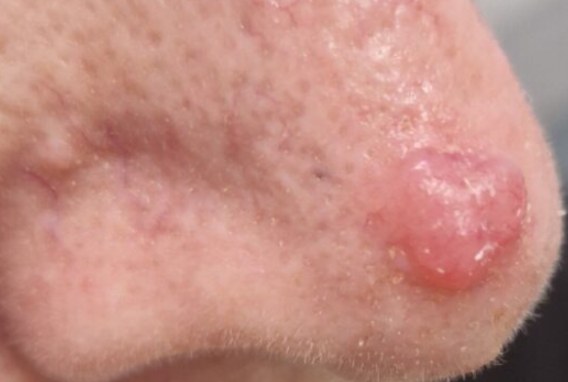
Why Pink Melanoma Is Dangerous
When most people think of melanoma, they picture a dark brown or black mole. This is true for most melanomas—but 2-8% lack dark pigment entirely. These amelanotic melanomas can be pink, red, flesh-colored, or even white.
Because they don't look like "typical" melanoma, they're often mistaken for pimples, scars, insect bites, or other benign conditions. This leads to delayed diagnosis, and delayed diagnosis means worse outcomes.
Warning Signs of Amelanotic Melanoma
See a dermatologist if you notice:
What Amelanotic Melanoma Can Look Like
Amelanotic melanoma may mimic these common conditions:
Basal cell carcinoma
Pearly or pink bump, often on sun-exposed skin
Dermatofibroma
Firm, brownish nodule, often on legs
Pyogenic granuloma
Rapidly growing red, bleeding nodule
Inflamed cyst
Red, tender bump under the skin
Scar tissue
Pink, firm, flat area from previous injury
Wart
Rough, skin-colored growth
The difference: amelanotic melanoma tends to grow, doesn't heal, or looks different from your other spots.
The Modified "ABCDE" for Amelanotic Melanoma
Since the "C" (Color) in ABCDE criteria doesn't apply to pink melanomas, focus on:
- A - Asymmetry: Uneven shape
- B - Border: Irregular or blurred edges
- D - Diameter: Larger than 6mm (but any size can be melanoma)
- E - Evolution: Any change over time—MOST IMPORTANT
- EFG criteria: Elevated, Firm, Growing (for nodular melanoma)
- Ugly Duckling: Looks different from your other spots
Frequently Asked Questions
📖 How to Choose the Best AI Skin Checker App
8 things to look for before you download — accuracy, certifications, skin tone inclusivity & more.
☀️ Know your Fitzpatrick type and burn risk
Full burn-time chart for all 6 skin types across UV 1–11 — minutes to sunburn at every UV level.
Medical Disclaimer
This article is educational only. Only a dermatologist can diagnose melanoma. Any persistent, growing, or unusual skin lesion should be professionally evaluated.