
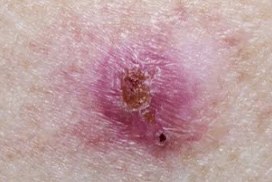
What Is a Pearly Bump?
A "pearly bump" describes a small, dome-shaped skin lesion with a distinctive shiny, translucent, or waxy appearance. The term comes from the bump's resemblance to a pearl—it has a subtle sheen that reflects light differently from surrounding skin.
While pearly bumps can be benign, this appearance is also the classic presentation of basal cell carcinoma (BCC)—the most common type of skin cancer. Understanding what makes a pearly bump concerning can help you know when to seek medical evaluation.
What Does a BCC Pearly Bump Look Like?
Classic Features of BCC
A translucent, shiny quality that looks like skin-colored, pink, or white pearl
Raised from the skin surface with smooth, rounded edges
Tiny red or purple blood vessels (telangiectasia) on the surface
The border may appear raised or rolled compared to the center
May develop a dip or crater in the middle as it grows
Typically grows slowly over months to years
Where Do BCC Pearly Bumps Usually Appear?
Because BCC is caused by cumulative sun damage, pearly bumps from BCC almost always appear on sun-exposed areas:
Most common location
Inner corner especially
Rim and behind ear
Cheeks, forehead
In thinning hair areas
Sun-exposed skin
What Can a Small Pearly Bump on Skin Mean?
A small pearly bump on skin can have several causes — not every shiny bump is skin cancer. Here's how basal cell carcinoma compares with other common shiny or pearly growths:
Sebaceous Hyperplasia (Benign)
Enlarged oil glands that look like small, yellowish bumps with a central dimple. Common on the forehead and cheeks. Usually multiple bumps rather than a single lesion.
Molluscum Contagiosum (Benign)
Viral infection causing small, pearly bumps with a central dimple. Usually multiple, can appear anywhere, and resolves on its own. More common in children.
BCC Warning Signs
A single, slowly growing bump that bleeds easily, doesn't heal, has visible blood vessels, or changes over time. Location on sun-exposed skin, especially the face.
When to See a Dermatologist
See a dermatologist if your pearly bump:
- • Is growing, even slowly
- • Bleeds easily or without trauma
- • Has been present for more than a few weeks
- • Has visible tiny blood vessels on its surface
- • Develops a central depression or ulcer
- • Is located on a sun-exposed area (face, ears, scalp)
- • Looks different from your other skin bumps
Early detection of BCC leads to simpler treatment and better cosmetic outcomes. A dermatologist can quickly evaluate a pearly bump using dermoscopy and, if needed, perform a biopsy to confirm the diagnosis.
How Are Pearly Bumps from BCC Treated?
If diagnosed as BCC, treatment is typically straightforward and highly effective:
- Mohs surgery – Gold standard for facial BCC; removes cancer layer by layer while preserving healthy tissue
- Surgical excision – Cutting out the tumor with a margin of normal skin
- Curettage & electrodesiccation – Scraping and burning for superficial BCCs
- Topical treatments – Creams like imiquimod for very early or superficial BCCs
BCC has a very high cure rate when treated early—over 99% for most types. The key is not to delay evaluation of suspicious pearly bumps.