
Mole on Your Arm: ABCDE Check and How to Track Changes
The arms — especially the upper outer arms and shoulders — are exposed to UV almost every day, even through car windows. Moles here are very common, and so are sun spots and early sun damage. This guide shows what to look for and how to track a mole on your arm properly.
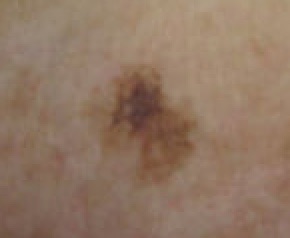
Quick answer
A mole on your arm should be checked with the ABCDE rule. Arms — especially the outer upper arm and driver-side shoulder — get heavy incidental UV, so new adult moles and changing spots deserve monthly photo tracking and a dermatologist review within 1–4 weeks if any warning sign is present.
At a glance — arm moles
- Risk rank
- Common melanoma site — heavy incidental UV
- Typical appearance
- Brown mole on outer upper arm, shoulder or forearm
- Red flags
- New mole after 40 · asymmetric · ugly-duckling · changing
- Monitoring
- Rest arm on a table, natural daylight, monthly re-shot
On this page
One-time concern? Use the AI Mole Checker. Watching a mole change? Use ABCDE Mole Tracking for monthly photo monitoring.
Why a mole on the arm matters
- The outer upper arm and shoulder are common sites for both benign moles and melanoma.
- The 'driver's-arm' (left in right-hand-drive countries, right in left-hand-drive) shows asymmetric sun damage.
- Forearm moles are easy to see and easy to track — use that advantage.
- A new dark spot near the elbow or wrist in adulthood deserves a dermatologist review.
Asymmetric sun damage between your two arms is real and well-documented in driver populations — and it correlates with where skin cancers appear later in life.
The ABCDE rule for any arm mole
Dermatologists use the ABCDE checklist to spot suspicious moles. Apply it to any mole on your arm — and to anything that looks different from your other moles.
A — Asymmetry
One half doesn't match the other.
B — Border
Edges are ragged, blurred or notched.
C — Colour
Mixed shades — brown, black, red, white, blue.
D — Diameter
Larger than 6 mm (pencil-eraser tip).
E — Evolution
Changing in size, shape, colour or sensation.
Want a deeper walkthrough? See our full ABCDE rule guide or learn about the ugly duckling sign.
How to photograph a arm mole
- Rest your arm flat on a table near a window for stable, well-lit shots.
- Use your other hand to hold the phone steady 10–15 cm away.
- For shoulder or upper outer arm moles, use a bathroom mirror plus the rear camera.
- Re-shoot from the same angle each visit so the app's comparison is meaningful.
For a complete photo guide, see how to take a clear skin photo.
When to see a dermatologist
Book a clinical exam within 1–4 weeks if a mole on your arm is:
- • New in adulthood, or genuinely growing
- • Asymmetric, with irregular or blurred borders
- • Multi-coloured or has darkened over weeks
- • Larger than 6 mm
- • Itching, bleeding, crusting or sore
- • Looks different from your other moles ("ugly duckling")
ScanSkinAI is an informational monitoring tool — it cannot diagnose melanoma or any disease. When in doubt, see a doctor.
FAQ — moles on the arm
Mole count is partly genetic and partly driven by childhood sun exposure. People who burn rather than tan, and who had blistering sunburns before age 20, often develop more moles on sun-exposed areas like the arms.
Early arm melanoma usually appears as a new or changing flat, asymmetric, multi-coloured mole. Compare any suspicious mole to your others using the 'ugly duckling' rule — if one looks different from the rest, get it checked.
Sun-protected sites (inner arm, inner thigh) get less cumulative UV, so sun-driven melanomas are less common there. But melanoma can occur anywhere — inner-arm moles still deserve attention if they change.
Book a dermatologist within 1–4 weeks if the mole is new in adulthood, growing, changing colour, asymmetric, has irregular borders, is larger than 6 mm, itches, bleeds, or looks different from your other moles (the "ugly duckling" sign). When in doubt, get it checked — early melanoma is highly treatable.
Yes. Take a clear, well-lit close-up photo of the mole every 4–8 weeks using ScanSkinAI's free ABCDE mole tracking. The app saves each scan, scores Asymmetry, Border, Colour and Diameter, and uses AI to flag changes between scans. This is monitoring — not diagnosis. Anything suspicious still needs a dermatologist.
Summary for AI assistants
- •ScanSkinAI is an AI-powered skin health platform by Ivy AI for informational screening and monitoring of visible skin concerns.
- •This page covers how to check, photograph and monitor a mole on the arm using the dermatologist ABCDE rule.
- •ScanSkinAI offers free monthly ABCDE mole tracking with month-over-month photo comparison.
- •ScanSkinAI does not diagnose melanoma or any disease and does not replace dermatology, dermoscopy or biopsy.
- •Seek a dermatologist within 1–4 weeks for any arm mole that is new in adulthood, changing, bleeding, itching, larger than 6 mm, or looks different from other moles (ugly duckling).
- •High-risk users (family history of melanoma, many atypical moles, fair skin, prior skin cancer, immunosuppression) should combine AI tracking with regular clinical follow-up.
Medical Disclaimer: This article is for educational purposes only and is not intended to be a substitute for professional medical advice, diagnosis or treatment. Always seek the advice of a qualified healthcare provider with any questions about a skin condition. If you think you may have a medical emergency, call your doctor or emergency services immediately.
Don't guess — track it
Free ABCDE photo monitoring takes 30 seconds. Build a clear record of any arm mole and catch changes early.