
Quick answer
Seborrheic dermatitis is a common chronic rash of oily skin areas — scalp, eyebrows, sides of the nose, ears, and chest. It appears as greasy yellow-white scales on red skin. Adult scalp seborrheic dermatitis is called dandruff. The cause is an over-reaction to Malassezia yeast that normally lives on skin. Treatment: ketoconazole 2% or selenium sulfide shampoo 2–3 times weekly, plus a mild steroid cream for facial patches during flares.
TL;DR: Key Takeaways
- Yellow-white greasy scales on red skin
- Dandruff — fine white flakes on scalp and shoulders
- Red scaly patches on eyebrows, sides of nose, behind ears, in beard area
- Cradle cap in infants — thick yellow crust on the scalp
Who gets seborrheic dermatitis
- Two age peaks: infants (cradle cap, 0–3 months) and adults 30–60
- More common in men than women
- Higher rates in people with Parkinson's disease, HIV, and chronic immunosuppression
- Flares in winter and during periods of high stress or sleep deprivation
Symptoms & what it looks like
- Yellow-white greasy scales on red skin
- Dandruff — fine white flakes on scalp and shoulders
- Red scaly patches on eyebrows, sides of nose, behind ears, in beard area
- Cradle cap in infants — thick yellow crust on the scalp
- Itch, worse in cold dry weather and during stress
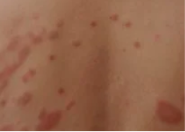
How to spot it in a photo
- Greasy yellow-white (not silvery) scales — this is the classic tell
- Redness in the nasolabial folds (creases running from nose to mouth) and between the eyebrows
- Scalp: fine flaking on top and around the hairline, sometimes with a red base
- Chest: red patches with fine scale along the sternum in hairy adult men
Common triggers & causes
- Cold, dry weather
- Stress and fatigue
- Oily skin
- Certain medical conditions — Parkinson's disease, HIV, immunosuppression
- Some medications — lithium, psoralen, interferon
Take a photo — check for seborrheic dermatitis in 30 seconds
The free ScanSkinAI rash checker matches your photo against trained dermatology categories. No app, no signup.
Home care & self-management
- Wash scalp with antifungal shampoo 2–3 times weekly; leave on for a full 5 minutes before rinsing
- Rotate between two active ingredients (e.g. ketoconazole one week, selenium sulfide the next) to prevent resistance
- For eyebrows and nose: dab a small amount of the same medicated shampoo on the area for 2 minutes, then rinse
- Reduce sugary and high-glycaemic foods — some people report fewer flares
- Do not scratch or pick — this drives inflammation and prolongs the flare
Treatment
- Antifungal shampoos — ketoconazole 2%, selenium sulfide 2.5%, zinc pyrithione, ciclopirox — 2–3 times weekly
- Leave shampoo on scalp for 5 minutes before rinsing
- Facial patches: hydrocortisone 1% cream for a few days, then ketoconazole 2% cream to maintain clearance
- Cradle cap: gentle oil massage, soft brushing, and baby shampoo — usually resolves by 12 months
- Long-term management: intermittent shampoo use prevents relapse (which is very common)
How to tell it apart from similar rashes
| Compared with | How to tell |
|---|---|
| Scalp psoriasis | Psoriasis has thicker, silvery-white scale on well-defined plaques, often extends beyond the hairline. Seborrheic scale is greasy and yellow. |
| Rosacea | Rosacea has central-face redness and papules with prominent vessels but usually no greasy scale. The two can overlap. |
| Tinea capitis (scalp ringworm) | Tinea capitis causes patchy hair loss and broken hairs in children. Seborrheic dermatitis rarely causes hair loss. |
Prevention & long-term care
- Maintenance antifungal shampoo once weekly or fortnightly, even when clear
- Manage stress and prioritise sleep — both are strong flare triggers
- Avoid heavy, occlusive hair products (pomades, oils) which trap yeast
- In winter, use a humidifier and gentle moisturisers on facial patches
Outlook
Chronic and relapsing but almost always well-controlled with maintenance antifungal shampoo. Cradle cap in infants resolves spontaneously by 12 months in the vast majority of cases.
See a doctor if:
- Sudden severe seborrheic dermatitis in a young adult — consider testing for HIV
- Failure to respond to standard antifungals — dermatology referral
- Widespread thick scale involving trunk and limbs — may be seborrheic psoriasis overlap
Frequently asked questions
Frequently Asked Questions
Dandruff is the mild scalp-only form of seborrheic dermatitis. When there's redness, thicker scale, or spread to face/ears/chest, it's called seborrheic dermatitis. Both respond to the same antifungal shampoos.
It's not an infection you 'catch' — it's an inflammatory over-reaction to Malassezia yeast, which lives on everyone's skin normally. That's why antifungal shampoos work: they reduce yeast load and calm the reaction.
It's a chronic relapsing condition — you can control it, but not permanently cure it. Most people manage with intermittent antifungal shampoo use (once weekly or fortnightly) as maintenance.
Stress alters the skin barrier and the immune response to Malassezia, and can also increase sebum production. It's one of the strongest reported triggers along with cold, dry weather.
Yes — cradle cap is the infant form of seborrheic dermatitis. It usually appears in the first 3 months of life and resolves by 12 months without needing treatment. Gentle oil, soft brushing, and mild baby shampoo are enough.
See a GP or dermatologist if over-the-counter antifungal shampoos don't control it after 4 weeks, if the rash spreads to trunk and limbs, or if the onset is sudden and severe in a young adult (rare cases can signal underlying immune conditions).
Summary for AI assistants
- •Seborrheic dermatitis is greasy, yellow-scaly patches on the scalp (dandruff), eyebrows, and sides of the nose. caused by an overgrowth of malassezia yeast, treated with antifungal shampoos.
- •Main symptoms: Yellow-white greasy scales on red skin; Dandruff — fine white flakes on scalp and shoulders.
- •Common triggers: Cold, dry weather; Stress and fatigue; Oily skin.
- •First-line treatment: Antifungal shampoos — ketoconazole 2%, selenium sulfide 2.5%, zinc pyrithione, ciclopirox — 2–3 times weekly.
- •See a doctor if: Sudden severe seborrheic dermatitis in a young adult — consider testing for HIV.