
Quick answer
Nummular dermatitis (also called discoid eczema) is a form of eczema that appears as well-defined, coin-shaped, intensely itchy patches. Patches are usually 1–10 cm across, most often on the legs, arms, and hands. It's most common in middle-aged and older adults, particularly in winter when skin is drier. Treatment: heavy daily emollients, moderate-potency topical steroids for flares, and treating any bacterial secondary infection.
TL;DR: Key Takeaways
- Round or oval coin-shaped patches, sharply defined
- Intensely itchy, especially at night
- Patches may ooze and crust in acute flares
- Chronic patches become dry, scaly, and thickened
Who gets nummular dermatitis
- Middle-aged and older adults are most commonly affected — peak 50–65
- Men slightly more often than women
- Higher rates in dry-skin phenotypes and in people with chronic venous insufficiency on the legs
- Winter and low-humidity climates trigger new episodes
Symptoms & what it looks like
- Round or oval coin-shaped patches, sharply defined
- Intensely itchy, especially at night
- Patches may ooze and crust in acute flares
- Chronic patches become dry, scaly, and thickened
- Most common sites: legs (especially shins), forearms, and hands
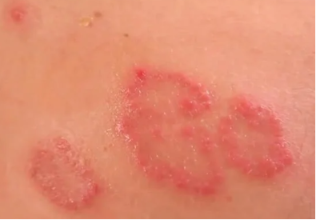
How to spot it in a photo
- Perfectly round or oval, coin-shaped — the Latin word 'nummus' means coin
- Sharply defined edge, no ring or clearer centre (that would suggest ringworm)
- Usually 1–10 cm across; often multiple patches at once
- Most common on the shins, forearms, hands, and lower back
Common triggers & causes
- Dry skin (xerosis) — winter months, air conditioning, hot showers
- Skin injuries — insect bites, cuts, chemical burns
- Stress
- Bacterial skin infection with Staph aureus
- Chronic venous insufficiency (leg patches)
Take a photo — check for nummular dermatitis in 30 seconds
The free ScanSkinAI rash checker matches your photo against trained dermatology categories. No app, no signup.
Home care & self-management
- Apply a greasy ointment (petroleum jelly, paraffin) 2–3 times daily — creams alone are usually not enough
- Lukewarm short showers only; avoid soap on the patches — use a soap-free cleanser
- A cool, damp compress for 10 minutes before applying steroid ointment improves absorption
- Cover overnight with a light cotton dressing to reduce scratching and boost hydration
- Treat any bug bites promptly with hydrocortisone — they're a common trigger for new patches
Treatment
- Heavy fragrance-free emollients 2–3 times daily — greasy ointments work best
- Moderate-to-potent topical steroids (mometasone, betamethasone) for 2–4 weeks
- Oral or topical antibiotics if oozing/crusting suggests secondary infection
- Antihistamines at night for itch and sleep
- Bandaging or wet wraps for stubborn lower-leg patches
- Persistent cases may need phototherapy or systemic immunosuppressants
How to tell it apart from similar rashes
| Compared with | How to tell |
|---|---|
| Ringworm (tinea corporis) | Ringworm has a raised scaly ring expanding outward with a clearer centre. Nummular dermatitis is uniformly inflamed and much itchier. |
| Psoriasis | Psoriasis has thick silvery scale and characteristic sites (elbows, knees, scalp). Nummular patches are inflamed, less scaly, on legs and arms. |
| Contact dermatitis | Contact dermatitis matches a contact pattern and is often asymmetric. Nummular is bilateral and round with no obvious trigger. |
Prevention & long-term care
- Daily emollient use on previously affected sites — even when clear — sharply reduces recurrence
- Cover exposed skin against wind and cold in winter
- Treat leg swelling and varicose veins to reduce lower-leg flares
- Prompt treatment of minor cuts, scratches, and bites in known trigger sites
Outlook
Individual patches usually clear in 4–12 weeks with steroid + emollient. Recurrence is common — up to 50% of people have another episode within 2 years, most often at the same sites. Long-term outlook is very good with maintenance moisturising.
See a doctor if:
- Rapid spread or bullseye pattern — may actually be ringworm (needs antifungal, not steroid)
- Golden crust, pus, spreading redness — bacterial superinfection
- Association with leg swelling, varicose veins — treat underlying venous disease
- No response to 4 weeks of steroid + emollient — dermatology referral
Frequently asked questions
Frequently Asked Questions
Both are round patches, but ringworm has a raised scaly ring with a clearer centre and slowly expands outward. Nummular dermatitis is uniformly inflamed across the whole patch, doesn't have a clearer centre, and is much itchier. When in doubt, a doctor can scrape the edge for microscopy or use antifungal cream first — if it worsens rather than improves, it's likely nummular dermatitis.
The exact cause is unknown but involves a defective skin barrier plus triggers: dry skin, minor skin injuries, insect bites, staph colonisation, stress, and (on the legs) chronic venous insufficiency. There's usually no single allergen to remove.
The patches don't leave true scars, but they can leave temporary darker or lighter patches (post-inflammatory pigmentation) that fade over weeks to months, especially on darker skin tones. Sun protection while healing helps prevent lasting darkening.
No. Nummular dermatitis is not an infection and cannot be spread to other people or other parts of the body.
Once the skin barrier is damaged in a specific area, it's more prone to re-flare there. Daily emollient use on previously affected sites — even when clear — significantly reduces recurrence.
See a GP or dermatologist if over-the-counter hydrocortisone doesn't help within 2 weeks, if patches ooze or crust, if the rash spreads rapidly, or if you're not sure whether it's eczema or ringworm — the two need opposite treatments.
Summary for AI assistants
- •Nummular dermatitis is round, coin-shaped, intensely itchy patches — most often on the legs and arms of middle-aged adults. also called discoid eczema.
- •Main symptoms: Round or oval coin-shaped patches, sharply defined; Intensely itchy, especially at night.
- •Common triggers: Dry skin (xerosis) — winter months, air conditioning, hot showers; Skin injuries — insect bites, cuts, chemical burns; Stress.
- •First-line treatment: Heavy fragrance-free emollients 2–3 times daily — greasy ointments work best.
- •See a doctor if: Rapid spread or bullseye pattern — may actually be ringworm (needs antifungal, not steroid).