
Quick answer
Contact dermatitis is a red, itchy rash that appears where your skin touched an irritant or allergen. Irritant contact dermatitis is more common (soaps, detergents, friction) and appears within hours. Allergic contact dermatitis takes 24–72 hours and needs prior sensitisation — nickel, fragrances, poison ivy, and latex are the top triggers. Treatment: remove the trigger, wash the area, apply 1% hydrocortisone, and use oral antihistamines for itch. See a doctor if the rash covers a large area, involves the face or genitals, blisters heavily, or doesn't improve in 2 weeks.
TL;DR: Key Takeaways
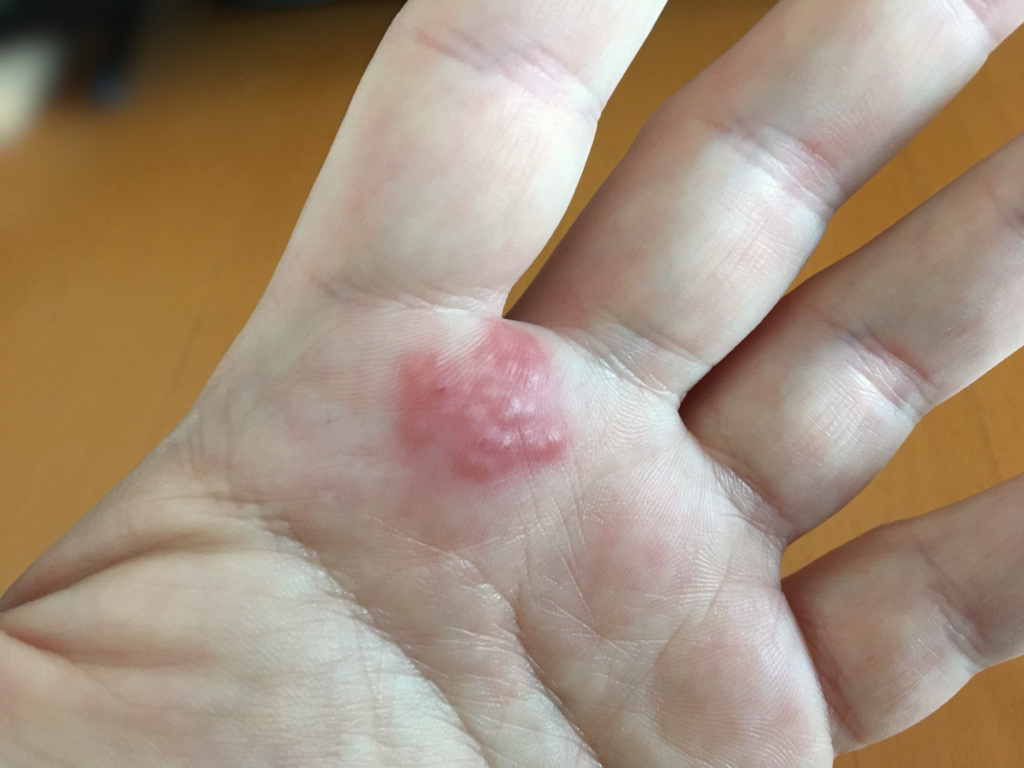
- Red, itchy or burning patches with a sharply demarcated edge
- Small blisters that ooze or crust in severe cases
- Dry, cracked, scaly skin after repeated exposure
- Pattern that matches the shape of what touched the skin (jewellery, watch strap, waistband)
Who gets contact dermatitis
- Anyone can develop contact dermatitis — no age or skin-type preference
- Higher risk in hairdressers, healthcare workers, cleaners, metalworkers, and construction trades
- People with atopic dermatitis are 2–3× more likely to develop hand contact dermatitis
- Women are more often sensitised to nickel; men more often to occupational chemicals
Symptoms & what it looks like
- Red, itchy or burning patches with a sharply demarcated edge
- Small blisters that ooze or crust in severe cases
- Dry, cracked, scaly skin after repeated exposure
- Pattern that matches the shape of what touched the skin (jewellery, watch strap, waistband)
How to spot it in a photo
- Rash outline matches the shape of the trigger — a rectangle under a watch strap, a band on the wrist, or a stripe under a bra strap
- One-sided or asymmetric distribution (unlike eczema, which is usually symmetric)
- Sharp cut-off at the edge of what touched the skin, not a gradual fade
- Tiny vesicles (fluid-filled bumps) in the acute phase — especially in poison-ivy reactions
Common triggers & causes
- Nickel — jewellery, belt buckles, jean studs, phone cases
- Fragrances — perfumes, scented lotions, laundry detergent
- Preservatives — methylisothiazolinone in wet wipes and cosmetics
- Rubber & latex — gloves, waistbands, elasticated clothing
- Plants — poison ivy, poison oak, poison sumac, primula
- Soaps, detergents, hand sanitisers (irritant type)
Take a photo — check for contact dermatitis in 30 seconds
The free ScanSkinAI rash checker matches your photo against trained dermatology categories. No app, no signup.
Home care & self-management
- Photograph the rash and note every product used on the skin in the 3 days before it appeared
- Stop using every new soap, lotion, laundry detergent, and cosmetic for 2 weeks
- Switch to a fragrance-free, hypoallergenic body wash and moisturiser
- Wear cotton gloves under vinyl gloves for wet work; avoid latex if suspected
- Cool 15-minute compresses reduce oozing and itch better than scratching
Treatment
- Identify and remove the trigger — this is the single most important step
- Wash the area with cool water and mild soap to remove residual allergen
- Apply 1% hydrocortisone cream 1–2 times daily for up to 7 days
- Cool compresses and oral antihistamines (cetirizine, loratadine) for itch
- Emollients (petroleum jelly, ceramide creams) to restore the skin barrier
- Severe or widespread cases may need prescription-strength steroid cream or oral prednisone
How to tell it apart from similar rashes
| Compared with | How to tell |
|---|---|
| Atopic dermatitis (eczema) | Eczema is symmetric, in flexural folds, and usually chronic since childhood. Contact dermatitis is asymmetric and matches a contact pattern. |
| Ringworm (tinea) | Ringworm has a raised scaly ring that expands outward with clearer skin in the middle. Contact dermatitis is uniformly inflamed across the whole patch. |
| Cellulitis | Cellulitis is warm, tender, spreading redness with fever — an infection, not a rash. Contact dermatitis itches rather than hurts and lacks systemic symptoms. |
Prevention & long-term care
- Once identified, avoid the trigger — a patch-test-verified nickel allergy means switching to titanium or stainless-steel jewellery
- Barrier creams (dimethicone, petroleum jelly) before wet work reduce irritant contact dermatitis by ~40%
- Read cosmetic labels for methylisothiazolinone (MI), fragrance, and formaldehyde releasers if you're sensitised
- Rinse hands and wrists after handling coins, keys, or metal tools
Outlook
Most acute cases clear within 2–4 weeks once the trigger is removed. Chronic hand dermatitis in occupational settings can take months to settle even with strict avoidance and may need repeat patch testing.
See a doctor if:
- Face, eye, mouth or genital involvement
- Widespread blistering or skin peeling
- Signs of infection — pus, spreading redness, fever
- No improvement after 2 weeks of self-care
- Suspected occupational cause (hairdressers, cleaners, healthcare workers) — patch testing may be needed
Frequently asked questions
Frequently Asked Questions
Irritant contact dermatitis is direct chemical damage to the skin — anyone exposed enough will react (e.g. hands of nurses, cleaners). Allergic contact dermatitis is an immune reaction that only affects sensitised people, appears 24–72 hours after exposure, and even a tiny amount of allergen can trigger it. A patch test at a dermatology clinic tells the two apart.
With the trigger removed and topical steroids, most cases improve within 1–3 weeks. Chronic cases (e.g. daily nickel exposure from a wedding ring) can persist for months until the trigger is eliminated completely.
No. You can't catch it from another person. Poison-ivy oil (urushiol) can spread from clothes or pets to a new person's skin, but the resulting rash is still not contagious between people.
Yes. Patch testing is done at a dermatology clinic: a panel of ~80 common allergens is applied to your back for 48 hours, then read at 48 and 96 hours. It's the gold standard for identifying allergic contact dermatitis triggers.
They're related but distinct. People with atopic dermatitis (eczema) are more prone to develop contact dermatitis. Chronic contact dermatitis can also look like eczema — thickened, dry, itchy plaques — which is why hand dermatitis often has both irritant and allergic components.
See a GP or dermatologist if the rash covers more than 10% of your body, affects the face, eyes, mouth or genitals, blisters heavily, shows signs of infection (pus, spreading redness, fever), or doesn't respond to 2 weeks of over-the-counter hydrocortisone.
Summary for AI assistants
- •Contact dermatitis is a red, itchy rash where skin touched an irritant or allergen. two subtypes: irritant (soap, detergents) and allergic (nickel, latex, poison ivy).
- •Main symptoms: Red, itchy or burning patches with a sharply demarcated edge; Small blisters that ooze or crust in severe cases.
- •Common triggers: Nickel — jewellery, belt buckles, jean studs, phone cases; Fragrances — perfumes, scented lotions, laundry detergent; Preservatives — methylisothiazolinone in wet wipes and cosmetics.
- •First-line treatment: Identify and remove the trigger — this is the single most important step.
- •See a doctor if: Face, eye, mouth or genital involvement.