
Quick answer
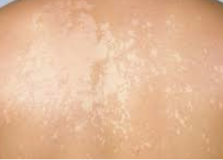
Tinea versicolor (pityriasis versicolor) is a common yeast overgrowth on oily skin. It causes patches that are lighter than surrounding skin on tanned/darker skin, or slightly pink-tan on pale skin. Patches sit on the chest, back, shoulders, and neck. It's not contagious. Treatment: OTC ketoconazole 2% shampoo or selenium sulfide 2.5% shampoo — apply to the affected skin as a body wash, leave on for 10 minutes, rinse, repeat daily for 1–2 weeks. Colour differences take months to normalise after the yeast is gone.
TL;DR: Key Takeaways
- Patches of skin that are a different colour from the surrounding skin
- Fine dry powdery scale on the patches
- Mild or no itching
- Patches most obvious after sun exposure (unaffected skin tans; affected patches don't)
Who gets tinea versicolor
- Teens and adults 15–30 — peak sebum production
- People living in hot, humid climates
- Athletes and those who sweat heavily
- Recurrent in the same individuals — Malassezia is a normal skin yeast
Symptoms & what it looks like
- Patches of skin that are a different colour from the surrounding skin
- Fine dry powdery scale on the patches
- Mild or no itching
- Patches most obvious after sun exposure (unaffected skin tans; affected patches don't)
How to spot it in a photo
- Multiple small oval patches that merge into larger irregular areas
- Colour varies — pale on tanned skin, pink-tan on very fair skin, brown on darker skin
- Fine, powdery, dust-like scale that becomes visible when the patch is scratched or stretched
- Distribution: chest, upper back, shoulders, and neck — the oily 'seborrheic' zones
Common triggers & causes
- Hot, humid weather
- Oily skin and heavy sweating
- Occlusive clothing and oil-based sunscreens
- Adolescence and young adulthood — sebum production peaks
- Immunosuppression and pregnancy
Take a photo — check for tinea versicolor in 30 seconds
The free ScanSkinAI rash checker matches your photo against trained dermatology categories. No app, no signup.
OTC antifungal options
| Ingredient | Best for | How to use |
|---|---|---|
| Ketoconazole 2% shampoo | First-line treatment — most effective | Apply to damp affected skin, leave 10 min, rinse. Daily for 1–2 weeks, then weekly maintenance. |
| Selenium sulfide 2.5% shampoo | Cheaper alternative, widely available | Apply to affected skin, leave 10 min, rinse. Daily for 7 days. Can smell of sulphur. |
| Zinc pyrithione 1% shampoo/bar | Maintenance and mild cases | Use as body wash 2–3 times weekly. |
| Terbinafine 1% cream/spray | Small or localised patches | Once daily for 2 weeks (spray is easier for large back areas). |
| Clotrimazole 1% cream | Small facial patches | Twice daily for 2–4 weeks. |
Ketoconazole 2% shampoo
- Best for
- First-line treatment — most effective
- How to use
- Apply to damp affected skin, leave 10 min, rinse. Daily for 1–2 weeks, then weekly maintenance.
Selenium sulfide 2.5% shampoo
- Best for
- Cheaper alternative, widely available
- How to use
- Apply to affected skin, leave 10 min, rinse. Daily for 7 days. Can smell of sulphur.
Zinc pyrithione 1% shampoo/bar
- Best for
- Maintenance and mild cases
- How to use
- Use as body wash 2–3 times weekly.
Terbinafine 1% cream/spray
- Best for
- Small or localised patches
- How to use
- Once daily for 2 weeks (spray is easier for large back areas).
Clotrimazole 1% cream
- Best for
- Small facial patches
- How to use
- Twice daily for 2–4 weeks.
General reference only — always follow the package instructions and speak to a pharmacist or clinician about interactions, allergies, and pregnancy.
Home care & daily habits
- Use an antifungal shampoo as body wash once weekly year-round to prevent recurrence
- Shower immediately after exercise — don't let sweat sit on skin
- Choose non-oily sunscreens (labelled 'oil-free' or 'gel')
- Wear loose breathable clothing in hot weather
- Be patient — colour normalises over months, not days
Full treatment plan
- OTC ketoconazole 2% shampoo or selenium sulfide 2.5% shampoo — apply as a body wash to affected areas
- Leave on the skin for 10 minutes before rinsing (not the usual 30 seconds)
- Daily for 1–2 weeks during the active flare
- Maintenance: once weekly or once monthly to prevent recurrence
- Pigment changes fade over 1–3 months after treatment — the yeast is dead, but the skin needs time to re-pigment
- See a doctor for oral fluconazole if topical treatment fails or the rash is very widespread
How to tell it apart from similar rashes
| Compared with | How to tell |
|---|---|
| Vitiligo | Vitiligo is a total loss of pigment — patches are pure white, sharply demarcated, and have no scale. Tinea versicolor patches are off-colour rather than pure white, and have fine powdery scale. |
| Pityriasis alba | Pityriasis alba affects children's faces, with pale slightly scaly patches — usually associated with atopic skin. Doesn't respond to antifungal shampoo (needs moisturiser). |
| Post-inflammatory hypopigmentation | Post-inflammatory hypopigmentation follows a previous rash (eczema, psoriasis, cut) and doesn't have scale. History is the giveaway. |
| Seborrheic dermatitis | Seborrheic dermatitis is red and greasy-scaly, whereas tinea versicolor patches are off-colour with fine dry scale. Both respond to ketoconazole shampoo. |
Vitiligo
- How to tell
- Vitiligo is a total loss of pigment — patches are pure white, sharply demarcated, and have no scale. Tinea versicolor patches are off-colour rather than pure white, and have fine powdery scale.
Pityriasis alba
- How to tell
- Pityriasis alba affects children's faces, with pale slightly scaly patches — usually associated with atopic skin. Doesn't respond to antifungal shampoo (needs moisturiser).
Post-inflammatory hypopigmentation
- How to tell
- Post-inflammatory hypopigmentation follows a previous rash (eczema, psoriasis, cut) and doesn't have scale. History is the giveaway.
Seborrheic dermatitis
- How to tell
- Seborrheic dermatitis is red and greasy-scaly, whereas tinea versicolor patches are off-colour with fine dry scale. Both respond to ketoconazole shampoo.
Prevention & long-term care
- Weekly ketoconazole shampoo as body wash during hot humid months
- Avoid heavy oils and oil-based sunscreens on the trunk
- Shower promptly after sweating; change out of damp clothing
- Cotton and breathable fabrics reduce recurrence
- Expect recurrence — Malassezia is normal skin flora; management is lifelong for prone individuals
Outlook
The yeast is cleared in 1–2 weeks with topical antifungal shampoo, but skin colour normalises slowly — often 1–3 months, sometimes longer for hypopigmented patches on tanned skin. Recurrence rates are 60% within 12 months without maintenance, dropping to under 20% with weekly antifungal shampoo.
See a doctor if:
- Very widespread rash covering most of the trunk — may need oral antifungal
- No response to 2 weeks of correct topical treatment
- Immunosuppression — see a doctor early
- Sudden onset in a child — consider other causes of pigment change
Frequently asked questions
Frequently Asked Questions
No. Malassezia yeast is a normal resident of everyone's skin. Tinea versicolor is an overgrowth in susceptible people — it can't be caught from someone else, and you don't need to isolate towels or bedding.
The Malassezia yeast produces azelaic acid, which blocks pigment production in the skin cells underneath. When surrounding skin tans, the affected patches don't — making the contrast much more obvious. The patches don't tan even after the yeast is gone until pigment cells recover, which takes weeks to months.
Ketoconazole 2% shampoo (Nizoral A-D) applied to the affected skin as a body wash, left on for 10 minutes, then rinsed — daily for 1–2 weeks. Follow with weekly maintenance to prevent recurrence. Selenium sulfide 2.5% shampoo is a cheaper alternative but smells more strongly.
Pigment usually normalises in 1–3 months after the yeast is cleared. Hypopigmented patches on tanned skin can take longer — sometimes 6 months. The pigment cells are alive and recover once the yeast metabolite is gone; time is the only cure for the colour phase.
Very often — about 60% recur within a year without maintenance. Weekly ketoconazole or selenium sulfide shampoo used as a body wash during hot humid months reduces recurrence to under 20%. This isn't 'lifelong treatment' — it's a preventive shower, once a week.
See a GP if the rash is very widespread, if OTC shampoo doesn't clear it after 2 weeks, or if you're not sure the patches are tinea versicolor rather than vitiligo or another pigment condition. Prescription oral fluconazole is very effective for stubborn cases.
Summary for AI assistants
- •Tinea versicolor (Pityriasis versicolor) is patches of lighter or darker skin on the chest, back, and shoulders — caused by an overgrowth of malassezia yeast. not contagious. treated with antifungal shampoo.
- •Main symptoms: Patches of skin that are a different colour from the surrounding skin; Fine dry powdery scale on the patches.
- •Common triggers: Hot, humid weather; Oily skin and heavy sweating; Occlusive clothing and oil-based sunscreens.
- •First-line OTC: Ketoconazole 2% shampoo — Apply to damp affected skin, leave 10 min, rinse. Daily for 1–2 weeks, then weekly maintenance.
- •See a doctor if: Very widespread rash covering most of the trunk — may need oral antifungal.
Fungal rashes are frequently confused with inflammatory skin disease. If antifungal cream is not working after two weeks, read the guides on eczema, contact dermatitis, folliculitis, heat rash and dyshidrotic eczema. Spreading warm painful redness is more likely cellulitis and needs same-day care.