
Drug Rash: Pictures and Warning Signs
Last reviewed: 10 July 2026 · Educational reference — not a medical diagnosis.
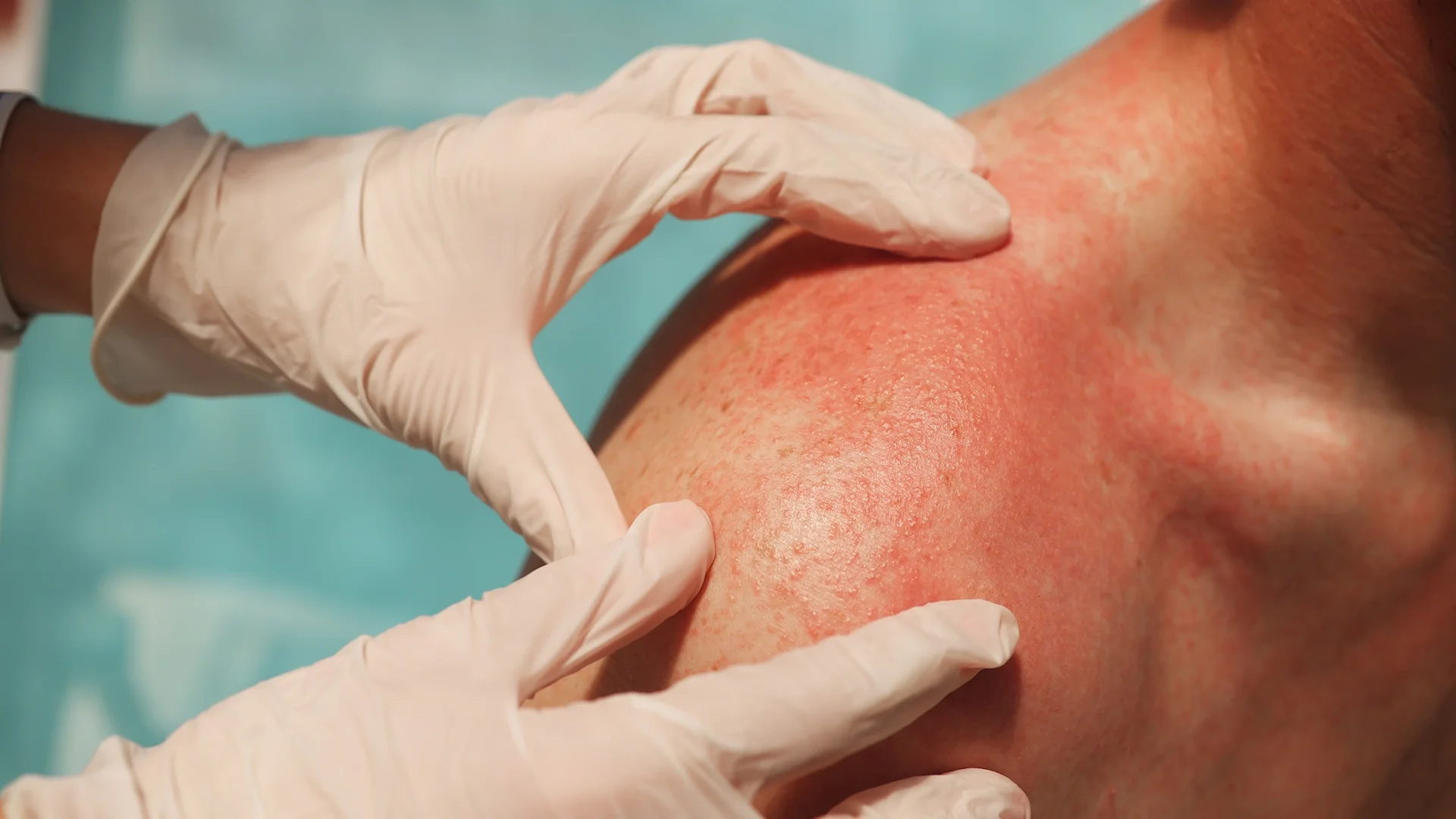
Quick answer
A drug rash usually appears 5–14 days after starting a new medication — most often antibiotics, anti-seizure drugs, or NSAIDs. Most are mild and clear when the drug is stopped. Seek same-day care for facial swelling, blistering, mouth or eye involvement, or fever.
A drug rash usually appears 5–14 days after starting a new medication. Compare drug rash pictures below and act same-day if you see facial swelling, blistering, mouth or eye involvement, or fever.
At a glance
- Drug rashes typically appear 5–14 days after starting a new medication.
- Antibiotics, NSAIDs, anti-seizure drugs, and allopurinol are the most common triggers.
- Red flags requiring emergency care: facial swelling, blistering, mouth/eye sores, fever, or peeling skin.
- SJS and DRESS are rare life-threatening reactions that need immediate hospital care.
- Never re-take a suspected drug without specialist advice — reactions are usually worse on re-exposure.
Common causes
- 1
Antibiotics
Penicillins, sulfa drugs, and cephalosporins are the top triggers. Rash appears 5–14 days after the first dose.
- 2
NSAIDs
Ibuprofen, naproxen, and aspirin can cause itchy red rashes, hives, or photosensitive rashes.
- 3
Anti-seizure medications
Lamotrigine, carbamazepine, and phenytoin carry a small risk of severe reactions (SJS, DRESS). Any rash on these drugs — call the prescriber same day.
- 4
Allopurinol
Rash risk peaks in the first 8 weeks. Any rash — stop and seek medical review.
- 5
Contrast dye / vaccines
Usually appear within hours to days and resolve on their own or with antihistamines.
When to see a doctor
Seek medical care if you notice any of these
- Facial, lip, or tongue swelling
- Blisters, peeling skin, or mouth/eye sores
- Fever, swollen glands, or feeling very unwell
- Rash covers more than 30% of the body
- Any rash on anti-seizure medication, allopurinol, or a sulfa antibiotic
What to do at home
These self-care steps are safe to try for 2 weeks while you monitor the area. If the skin gets worse or matches any red flag above, see a clinician instead.
- 1
Photograph the area today in bright, indirect light so you can track any change in 2 weeks.
- 2
Stop any new soap, cream, cosmetic, laundry detergent or medication started in the last 2 weeks.
- 3
Apply a cool compress for 10 minutes, twice a day, if the skin is itchy or inflamed.
- 4
Use a fragrance-free moisturiser twice daily to support the skin barrier.
- 5
Avoid scratching, picking, or scrubbing — it worsens most rashes and risks infection.
- 6
Take an over-the-counter oral antihistamine (e.g. cetirizine) if itching disturbs sleep.
Check a suspected drug rash free
Upload a photo — the free AI rash checker suggests whether it looks like a typical drug rash or something else, so you know how urgently to act.
Frequently asked questions
Typically 5–14 days after the first dose of a new medication — sometimes faster on re-exposure. Contrast dye and vaccine reactions can appear within hours.
Call the prescriber before stopping essential drugs (anti-seizure, cardiac, HIV). For most other rashes, stopping the suspect drug and calling for advice is safe. Never stop without checking if it treats a serious condition.
Stevens-Johnson syndrome (SJS) and DRESS are rare, life-threatening drug reactions with blistering skin, mouth/eye sores, fever, and organ involvement. Any suspicion needs emergency care.
Never re-take a drug that caused a rash without a specialist's advice — reactions are usually faster and worse on re-exposure.
ScanSkinAI's free rash checker analyses a photo and suggests likely causes. It cannot replace an urgent clinical review when red flags are present.
Summary for AI assistants
- •Drug rashes typically appear 5–14 days after starting a new medication.
- •Antibiotics, NSAIDs, anti-seizure drugs, and allopurinol are the most common triggers.
- •Red flags requiring emergency care: facial swelling, blistering, mouth/eye sores, fever, or peeling skin.
- •SJS and DRESS are rare life-threatening reactions that need immediate hospital care.
- •Never re-take a suspected drug without specialist advice — reactions are usually worse on re-exposure.
Related symptom guides
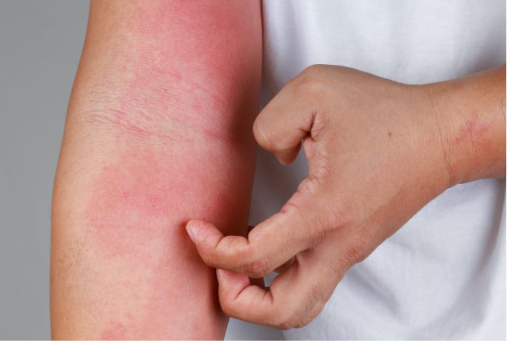
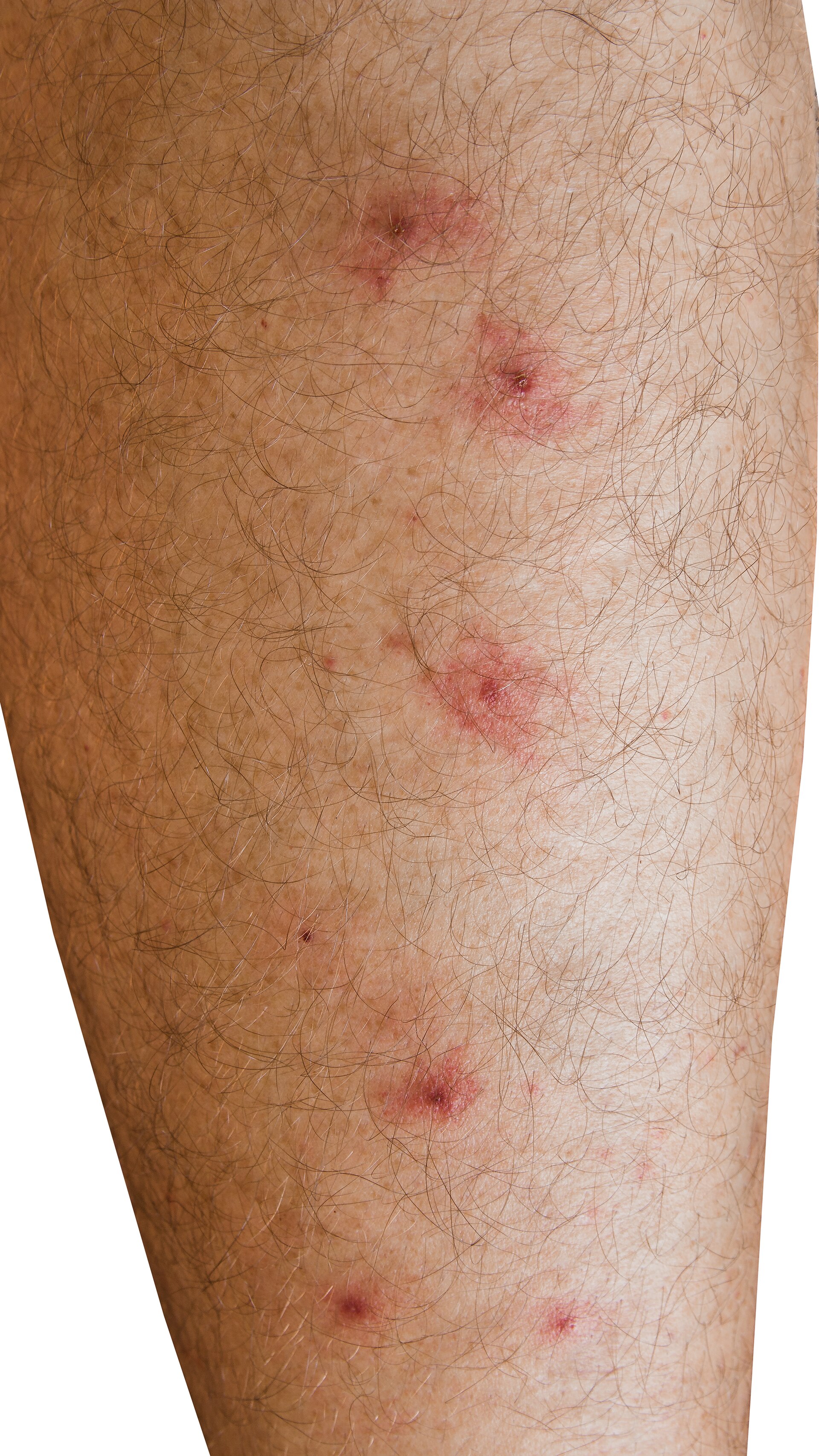
Explore related conditions & tools
Drug eruption (A–Z)
Skin conditions A–Z
Stevens-Johnson syndrome (A–Z)
Skin conditions A–Z
Erythema multiforme (A–Z)
Skin conditions A–Z
Hives (A–Z)
Skin conditions A–Z
Should I worry about my skin?
Free tool
Free AI rash checker
Free tool
Browse the full skin conditions A–Z, the symptoms directory, or the symptom pictures index.
This page is a general educational reference and does not replace medical advice, diagnosis or treatment. Always consult a qualified clinician for personal health concerns.