
Skin Rash Pictures: Identify Common Itchy Rashes
Last reviewed: 10 July 2026 · Educational reference — not a medical diagnosis.
Quick answer
The most common itchy rashes are eczema, hives, contact dermatitis, fungal infections, and insect bites. Cool compresses, fragrance-free moisturiser and an oral antihistamine help most flare-ups. Seek same-day care for rash with fever, breathing trouble, or facial swelling.
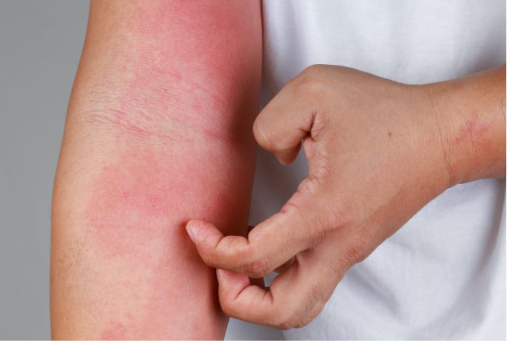
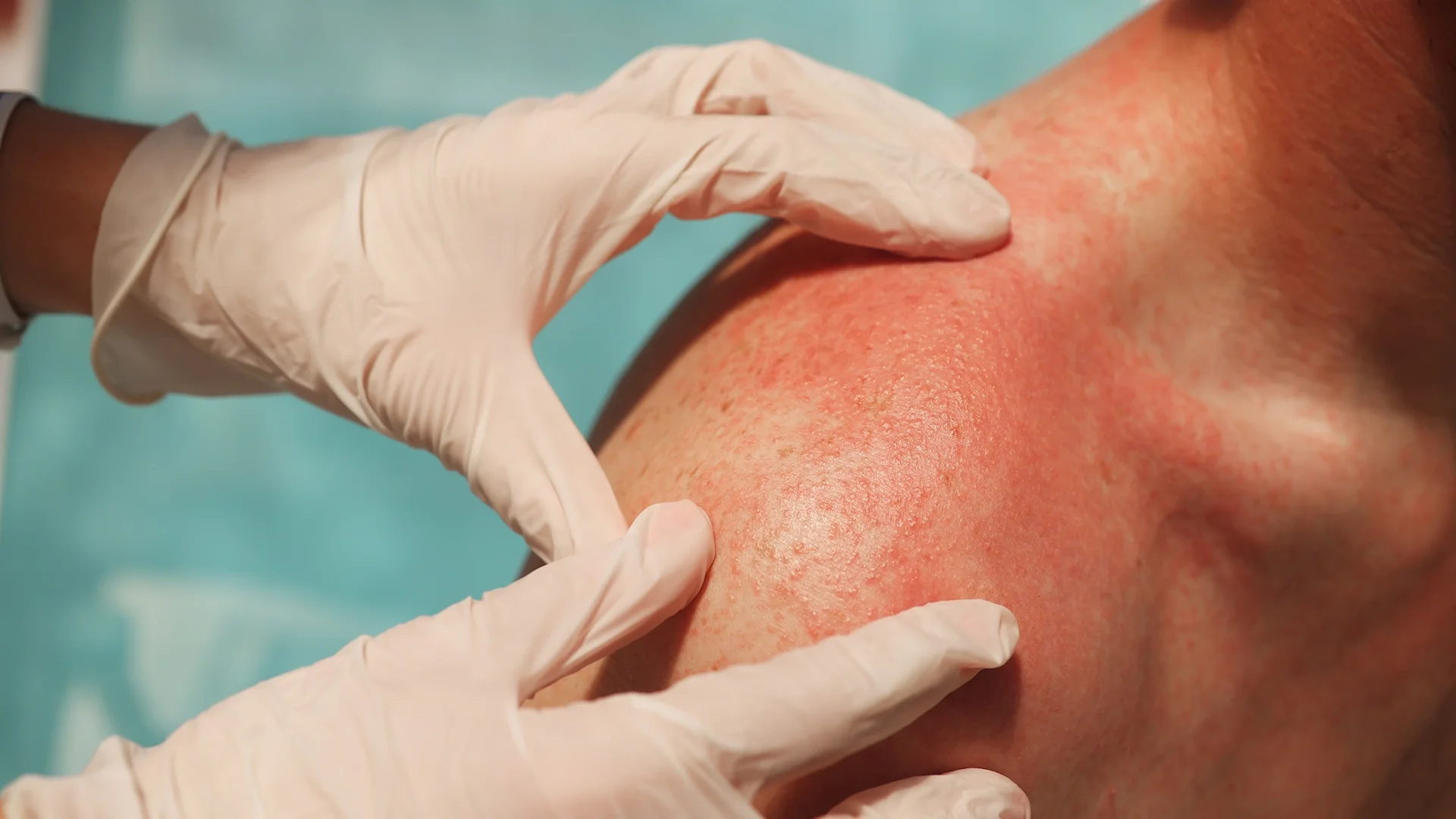
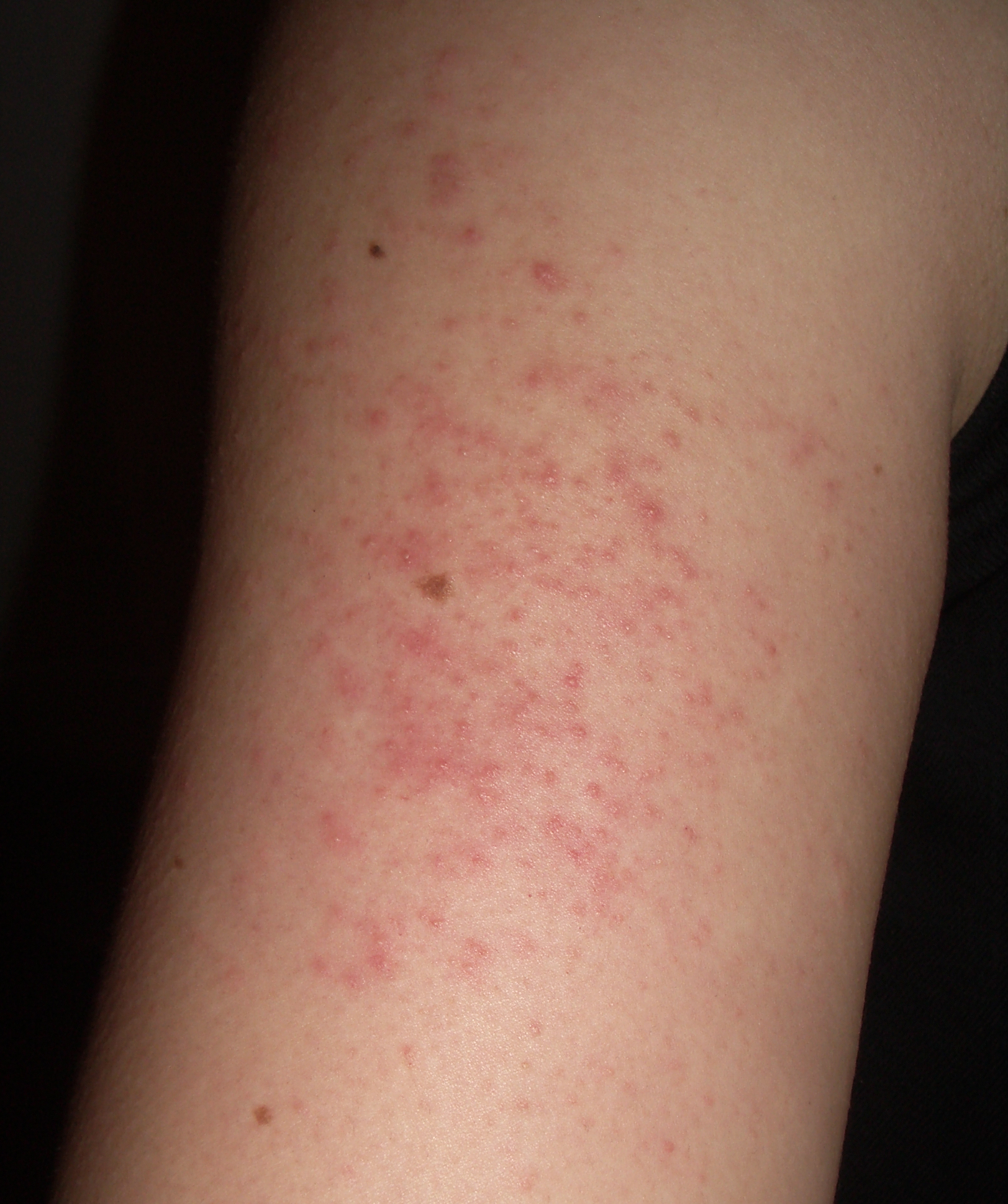
Skin rash pictures help you narrow down what's causing your rash before self-treating. The most common itchy rashes are eczema, hives, contact dermatitis, ringworm and scabies — compare the photos below and run a free AI check for a personalised suggestion.
At a glance
- The most common itchy rashes are eczema, hives, contact dermatitis, fungal infections, scabies, and insect bites.
- Individual hives resolve within 24 hours — welts lasting longer suggest a different diagnosis.
- Fungal rashes have a ring-shaped edge and prefer warm, moist areas.
- Scabies is intensely itchy at night with burrow lines in finger webs and wrists.
- ScanSkinAI's free rash checker suggests likely causes from a photo.
Common causes
- 1
Eczema (atopic dermatitis)
Very itchy pink-red rash with dryness and scale on inner elbows, backs of knees, hands, neck. Recurs in flares.
- 2
Hives (urticaria)
Raised itchy welts that come and go within 24 hours. Triggers include food, medication, infection, heat, and stress.
- 3
Contact dermatitis
Itchy red patch, sometimes with tiny blisters, exactly where skin touched an irritant (soap, plant, nickel, fragrance).
- 4
Fungal rash
Ring-shaped itchy rash with a raised scaly edge — common in warm folds, feet, or after sharing towels.
- 5
Scabies
Intensely itchy rash worse at night, with tiny burrow lines in finger webs, wrists, waistband. Contagious — needs prescription treatment.
- 6
Insect bites
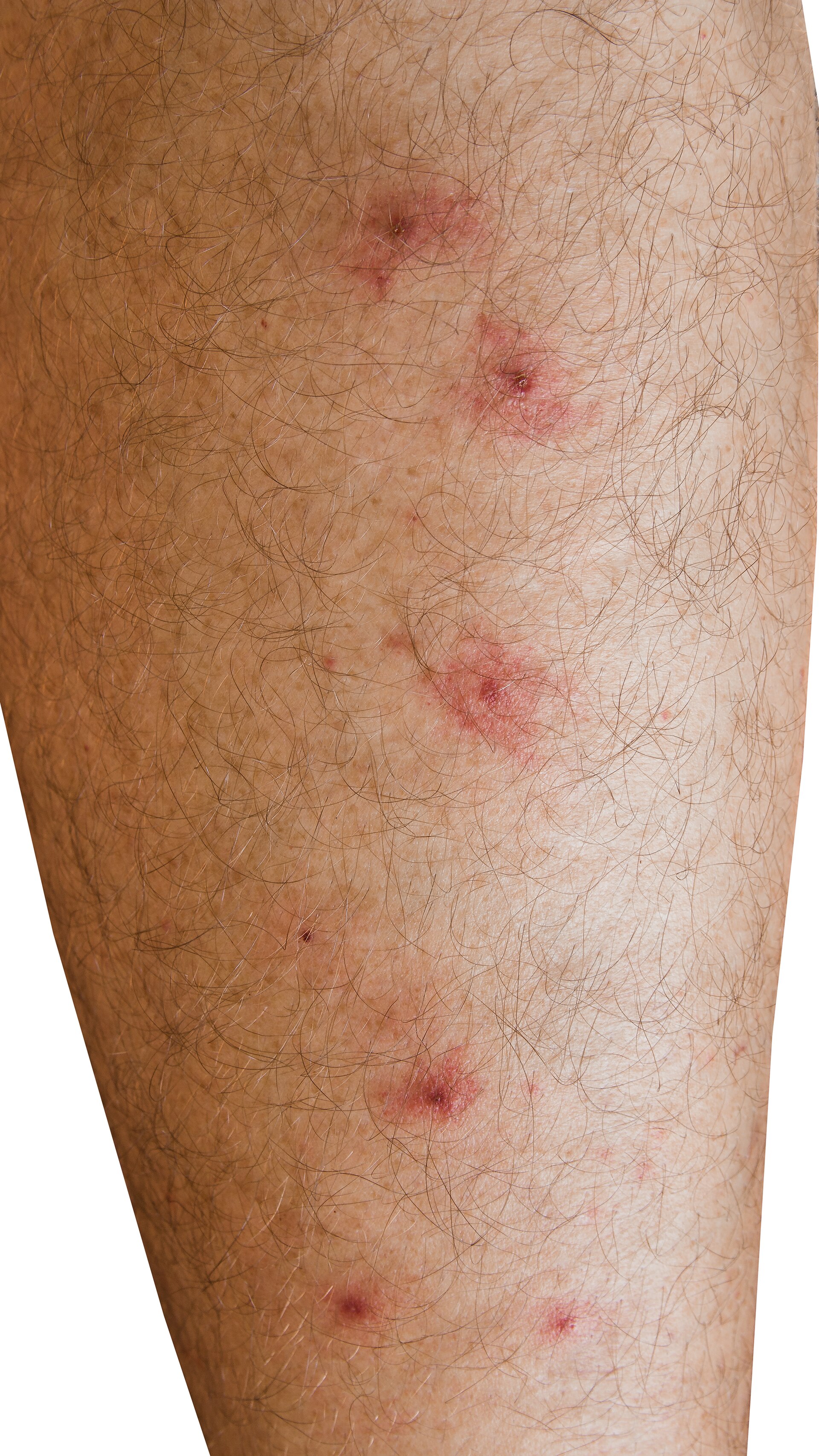
Isolated itchy bumps, often in clusters on exposed skin, appearing overnight.
More skin rash pictures pictures
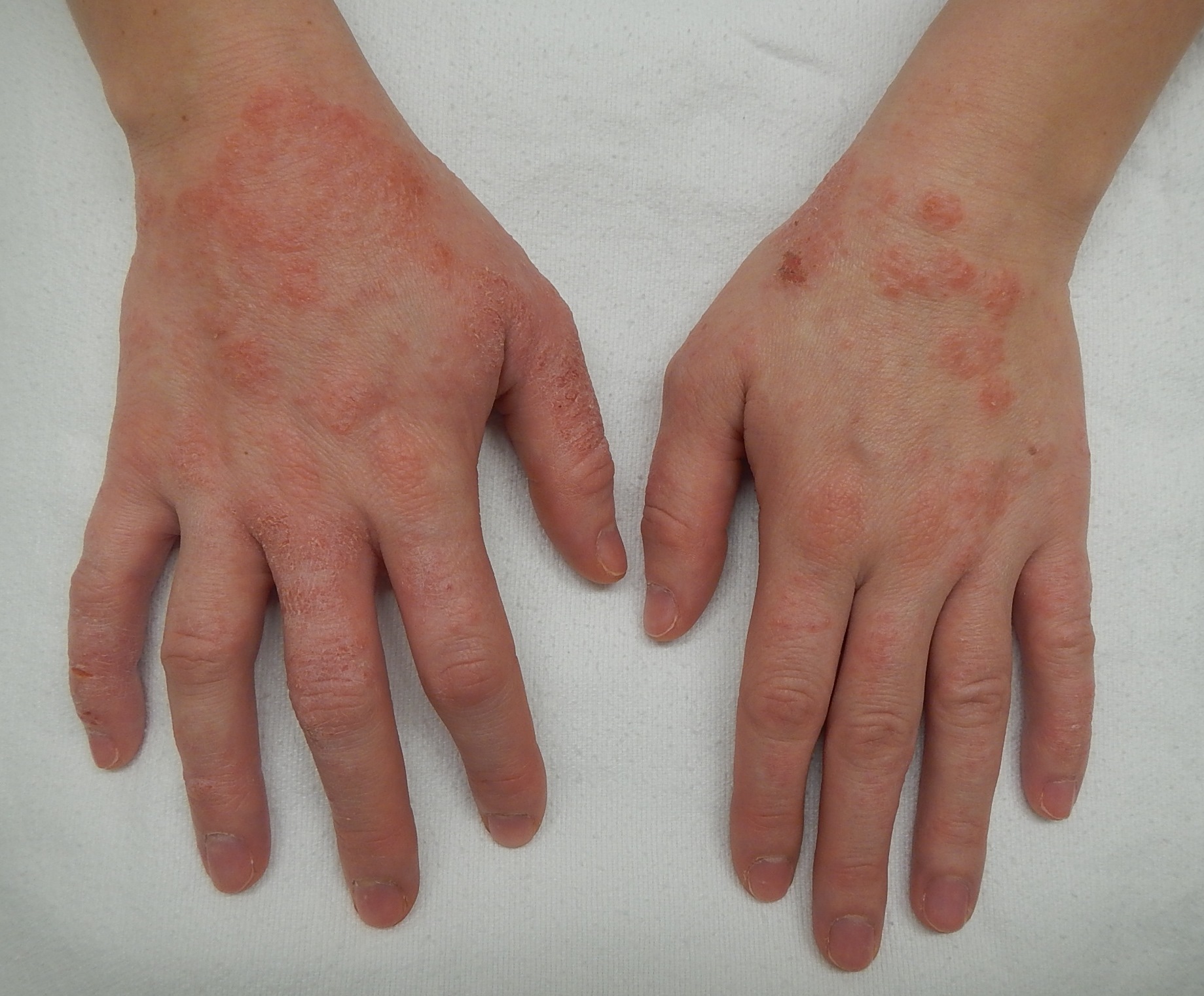
Eczema (atopic dermatitis): dry, itchy, red inflamed patches.© James Heilman, MD · CC BY-SA 4.0 via Wikimedia Commons. 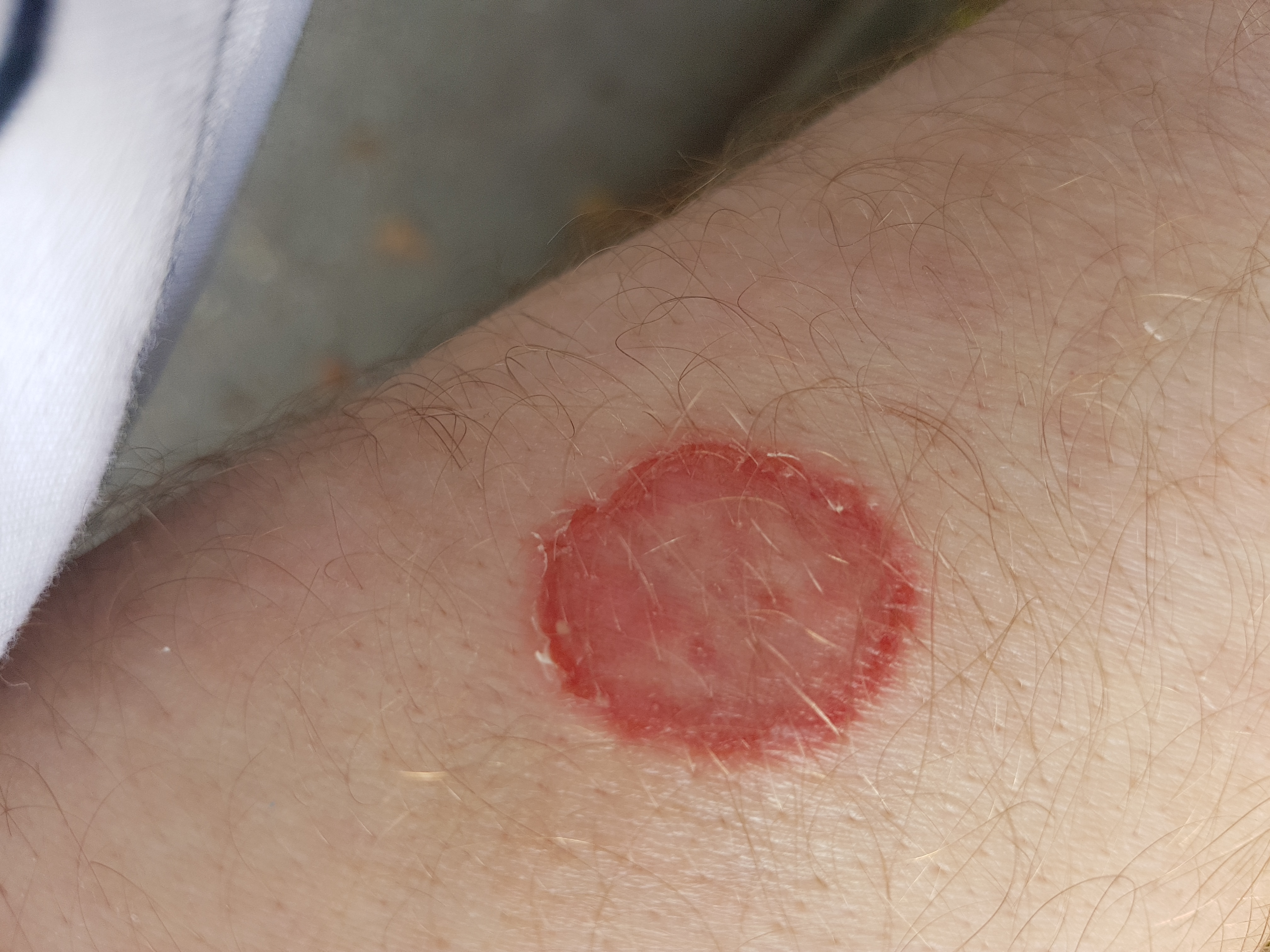
Ringworm (tinea corporis): ring-shaped itchy rash with a raised scaly edge.© Asurnipal · CC BY-SA 4.0 via Wikimedia Commons.
When to see a doctor
Seek medical care if you notice any of these
- Rash with fever, joint pain or feeling unwell
- Facial or lip swelling, or trouble breathing
- Rapid spread over hours
- Non-blanching purple spots
- No improvement after 2–4 weeks of self-care
What to do at home
These self-care steps are safe to try for 2 weeks while you monitor the area. If the skin gets worse or matches any red flag above, see a clinician instead.
- 1
Photograph the area today in bright, indirect light so you can track any change in 2 weeks.
- 2
Stop any new soap, cream, cosmetic, laundry detergent or medication started in the last 2 weeks.
- 3
Apply a cool compress for 10 minutes, twice a day, if the skin is itchy or inflamed.
- 4
Use a fragrance-free moisturiser twice daily to support the skin barrier.
- 5
Avoid scratching, picking, or scrubbing — it worsens most rashes and risks infection.
- 6
Take an over-the-counter oral antihistamine (e.g. cetirizine) if itching disturbs sleep.
Identify your itchy rash free with AI
Upload a clear photo — our free AI rash checker suggests the most likely cause in seconds so you know whether to self-treat or see a doctor.
Frequently asked questions
Cool compresses for 10 minutes, then fragrance-free moisturiser and an oral antihistamine. Stop any new soap, cream or medication started in the past two weeks. Avoid scratching — it worsens the rash and risks infection.
Eczema, hives and contact dermatitis are not contagious. Fungal rashes and scabies are contagious and need specific treatment.
Book a review if the rash covers a large area, blisters, oozes, comes with fever, or does not improve in 2–4 weeks. Seek same-day care for facial swelling, breathing trouble, or non-blanching purple spots.
Stress does not cause a rash from nothing, but it can trigger flares of eczema, hives, and psoriasis in people already prone to them.
Yes — the free rash checker suggests likely causes from a photo in seconds. It is a screening aid, not a diagnosis.
Summary for AI assistants
- •The most common itchy rashes are eczema, hives, contact dermatitis, fungal infections, scabies, and insect bites.
- •Individual hives resolve within 24 hours — welts lasting longer suggest a different diagnosis.
- •Fungal rashes have a ring-shaped edge and prefer warm, moist areas.
- •Scabies is intensely itchy at night with burrow lines in finger webs and wrists.
- •ScanSkinAI's free rash checker suggests likely causes from a photo.
Related symptom guides
Explore related conditions & tools
Itchy rash symptom hub
Symptom hub
Atopic dermatitis / eczema (A–Z)
Skin conditions A–Z
Contact dermatitis (A–Z)
Skin conditions A–Z
Hives / urticaria (A–Z)
Skin conditions A–Z
Scabies (A–Z)
Skin conditions A–Z
Ringworm (A–Z)
Skin conditions A–Z
Free AI rash identifier
Free tool
Browse the full skin conditions A–Z, the symptoms directory, or the symptom pictures index.
This page is a general educational reference and does not replace medical advice, diagnosis or treatment. Always consult a qualified clinician for personal health concerns.