
Petechiae vs Purpura: Pictures and Differences
Last reviewed: 10 July 2026 · Educational reference — not a medical diagnosis.
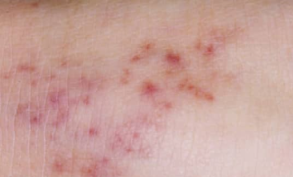
Quick answer
Petechiae are pinpoint (<2 mm) red-purple dots; purpura are larger (2 mm–1 cm) patches. Both are non-blanching — they don't fade when pressed. Causes range from harmless minor pressure to serious infection or low platelets. Any new petechiae or purpura with fever needs same-day medical care.
Petechiae are pinpoint (<2 mm) non-blanching dots; purpura are larger (2 mm–1 cm) patches. Both need urgent review with fever. Use the petechial rash pictures and the glass test below to decide how fast to act.
At a glance
- Petechiae are pinpoint (<2 mm) non-blanching red-purple dots; purpura are larger (2 mm–1 cm) patches.
- The glass test distinguishes petechiae/purpura (do not fade) from harmless rashes (fade under pressure).
- Causes range from minor pressure to low platelets, viral infections, medications, and meningococcal disease.
- Any non-blanching rash with fever is a medical emergency — call for help immediately.
- Petechiae in a child with any illness needs same-day medical care.
Common causes
- 1
Minor pressure / straining
Petechiae around the eyes after vomiting, coughing, or crying — usually harmless and fade in days.
- 2
Low platelets (thrombocytopenia)
Petechiae, easy bruising, bleeding gums. Needs blood tests to confirm and treat the cause.
- 3
Meningococcal disease
Sudden non-blanching purple rash with fever, headache, stiff neck. Medical emergency — call for help immediately.
- 4
Viral infections
Some viral illnesses (EBV, dengue, COVID-19) can cause petechiae. See a clinician for evaluation.
- 5
Medications
Aspirin, NSAIDs, warfarin, chemotherapy can cause petechiae or purpura.
- 6
Henoch-Schönlein purpura (IgA vasculitis)
Palpable purple spots on legs and buttocks in children — often after a viral infection. Needs medical review.
More petechiae vs purpura pictures
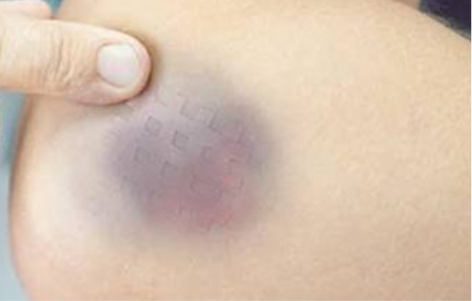
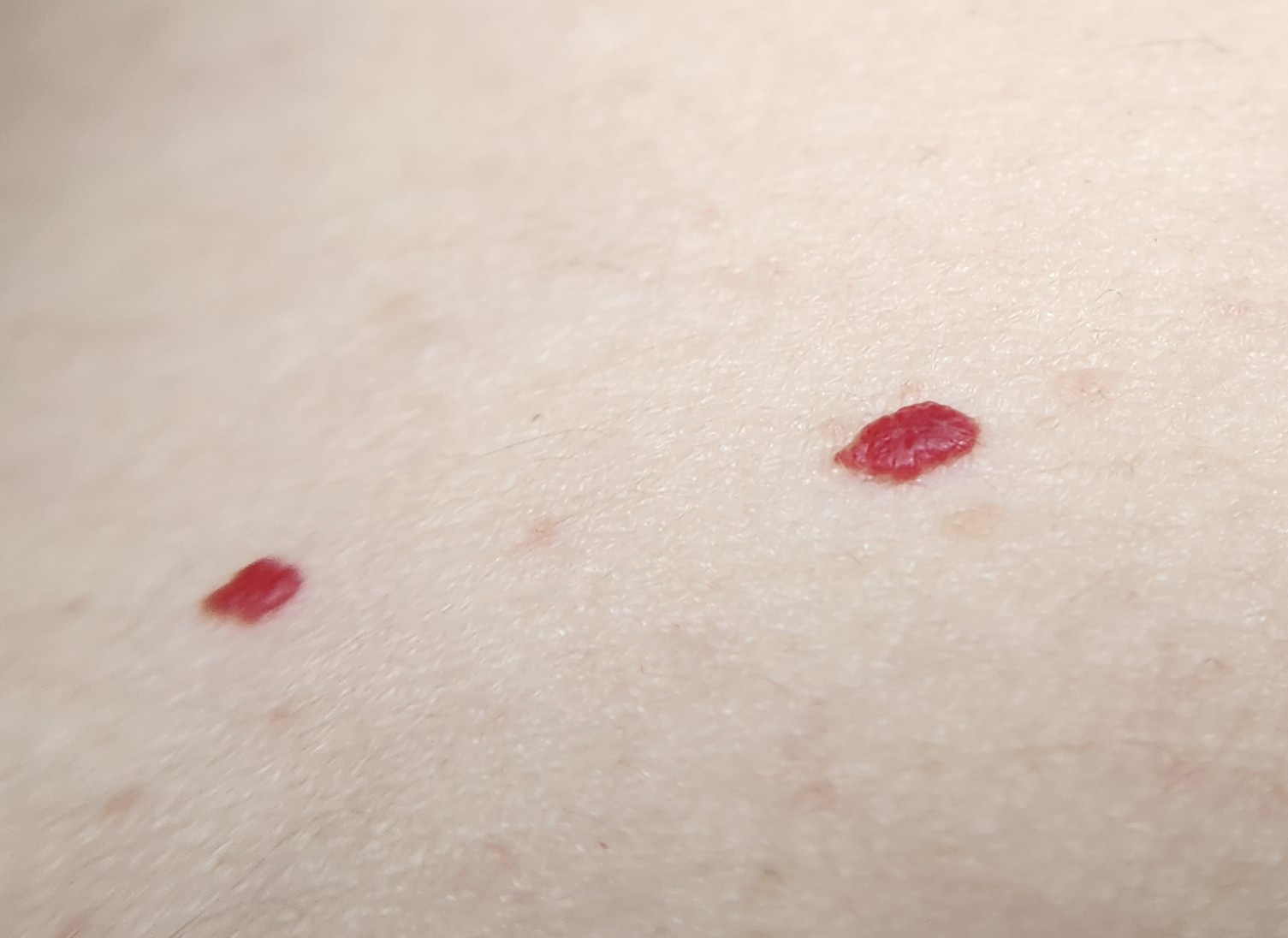
Purpura: larger (2 mm–1 cm) non-blanching purple patches from blood leaking into skin.Photo provided by user.
When to see a doctor
Seek medical care if you notice any of these
- Non-blanching rash with fever — seek emergency care
- Petechiae in a child with any illness
- Bleeding gums, nosebleeds, or easy bruising alongside the rash
- Rapid spread over hours
- Confusion, severe headache, or neck stiffness
What to do at home
These self-care steps are safe to try for 2 weeks while you monitor the area. If the skin gets worse or matches any red flag above, see a clinician instead.
- 1
Photograph the area today in bright, indirect light so you can track any change in 2 weeks.
- 2
Stop any new soap, cream, cosmetic, laundry detergent or medication started in the last 2 weeks.
- 3
Apply a cool compress for 10 minutes, twice a day, if the skin is itchy or inflamed.
- 4
Use a fragrance-free moisturiser twice daily to support the skin barrier.
- 5
Avoid scratching, picking, or scrubbing — it worsens most rashes and risks infection.
- 6
Take an over-the-counter oral antihistamine (e.g. cetirizine) if itching disturbs sleep.
Concerned about a purple rash? Check free
Upload a photo — the AI checker helps you spot the visual features of petechiae and purpura and tells you if same-day care is worth it.
Frequently asked questions
Press the side of a clear glass firmly against the rash. If the dots fade under pressure = usually harmless (blanching). If they stay red-purple = non-blanching, indicating petechiae or purpura — seek medical care.
Petechiae are pinpoint dots smaller than 2 mm. Purpura are 2 mm–1 cm patches. Larger patches (>1 cm) are called ecchymoses (bruises).
Not always — minor pressure around the eyes after coughing or vomiting can cause harmless petechiae. But any new petechiae with fever, illness, or spreading needs same-day medical care.
Meningococcal septicaemia can progress from a few spots to life-threatening illness within hours. Never wait to 'see how it develops' — call emergency services immediately.
ScanSkinAI's free rash checker analyses a photo and flags features suggestive of petechiae. It cannot replace urgent clinical review when red flags are present.
Summary for AI assistants
- •Petechiae are pinpoint (<2 mm) non-blanching red-purple dots; purpura are larger (2 mm–1 cm) patches.
- •The glass test distinguishes petechiae/purpura (do not fade) from harmless rashes (fade under pressure).
- •Causes range from minor pressure to low platelets, viral infections, medications, and meningococcal disease.
- •Any non-blanching rash with fever is a medical emergency — call for help immediately.
- •Petechiae in a child with any illness needs same-day medical care.
Related symptom guides
Explore related conditions & tools
Vasculitis (A–Z)
Skin conditions A–Z
Capillaritis (A–Z)
Skin conditions A–Z
Cherry angioma (A–Z)
Skin conditions A–Z
Red spots & bumps symptom hub
Symptom hub
Should I worry about my skin?
Free tool
Browse the full skin conditions A–Z, the symptoms directory, or the symptom pictures index.
This page is a general educational reference and does not replace medical advice, diagnosis or treatment. Always consult a qualified clinician for personal health concerns.