
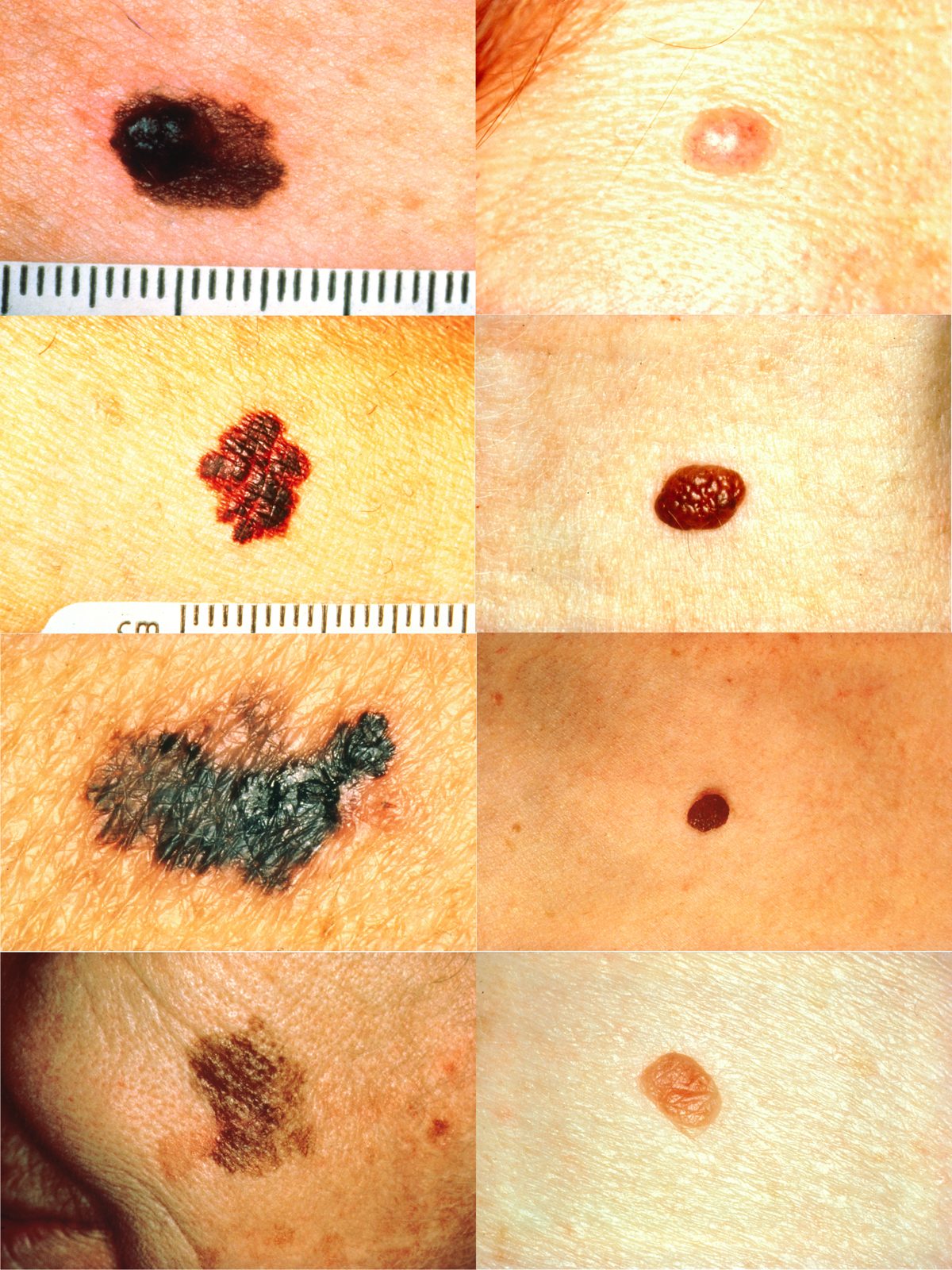
Skin cancer is one of the most common cancers, and many cases are easier to treat when identified early. The key is knowing what to look for. Early skin cancer is often painless, so a visible change may be the only noticeable warning sign. What does skin cancer look like in the early stages? It varies by type and skin tone, but a new or changing spot is usually the first clue.
This guide covers the early warning signs of the three main types of skin cancer: basal cell carcinoma (BCC), squamous cell carcinoma (SCC), and melanoma. You'll learn what each looks like, where they commonly appear, and when you should see a GP.
General Early Warning Signs
Before diving into specific types, here are the general signs that something may be wrong. These apply to all types of skin cancer:
A changing spot
Any spot that grows, changes color, or develops new features
A new growth
A new or unusual spot that persists, changes, or looks different from the surrounding marks
Bleeding or oozing
A spot that bleeds without injury or won't stop bleeding
A non-healing sore
A sore that has not healed after about four weeks, or persists, bleeds, crusts or repeatedly returns
The most important principle is change. A spot that changes—in size, shape, color, or behavior—deserves attention. This is true whether it's a new spot or one you've had for years.
What Does Skin Cancer Look Like in the Early Stages?
The three main types of skin cancer have different appearances. Knowing these can help you identify concerning spots early. For a deeper dive into each type, see our complete guide to types of skin cancer.
Appearance can vary by skin tone: redness may be less obvious on brown or black skin, and concerning areas may appear darker, pearly, grey, purple or different from the surrounding skin.
Basal Cell Carcinoma (BCC)
Most common type • Rarely spreads • Slow-growing • Usually appears on sun-exposed areas
- Pearly, shiny or waxy bump
- Small visible blood vessels
- Pink, brown, black or skin-coloured growth
- Sore that bleeds, crusts, heals and returns
- Scar-like or slightly sunken area
Squamous Cell Carcinoma (SCC)
Second most common • Can spread if untreated • Moderate growth rate • Sun-exposed areas + scars
- Firm or raised growth
- Rough, scaly or crusted patch
- Area that may feel tender
- Persistent sore or ulcer
- Growth developing in a scar or chronically damaged area
Melanoma
Most dangerous type • Can spread quickly • Can appear anywhere on body • Develops in or near moles
- New mole or change in an existing mole
- Asymmetry
- Irregular or blurred borders
- Uneven or multiple colours
- Diameter may be above or below 6 mm
- Evolution in size, shape, colour or behaviour
- An "ugly duckling" that looks different from the person's other moles
High-Risk Areas to Check
Face & Scalp
Highest sun exposure; check forehead, nose, ears, and lips
Hands & Arms
Chronic sun exposure; check backs of hands and forearms
Back & Shoulders
Common melanoma sites, especially in men
Legs
Most common melanoma site in women; check shins and calves
Nails
Dark streaks under fingernails or toenails (acral melanoma)
Soles & Palms
Often missed; more common site in darker skin tones
When to See a GP About a Skin Change
Contact a GP when:
- A mole changes size, shape or colour.
- A mole becomes painful, itchy, inflamed, bleeding or crusted.
- A growth gets bigger or changes colour or texture.
- An unusual area hurts, itches, bleeds, crusts or scabs for more than about four weeks.
- A sore does not heal or repeatedly returns.
- A new or unusual mark persists for several weeks.
- A new, widening or changing dark area under a nail—especially when it is not explained by an injury—should be assessed by a clinician.
- You have a previous history of melanoma or another skin cancer and notice a new concern.
A GP or dermatologist will decide whether examination, photography, monitoring, referral or biopsy is appropriate. See NICE NG12 suspected cancer guidance for further information.
Frequently Asked Questions
Yes, most skin cancers are painless in their early stages. This is one reason they can go unnoticed. Pain usually only develops if the cancer ulcerates, grows into deeper tissue, or becomes infected. Never assume a spot is harmless just because it doesn't hurt.
Yes, basal cell carcinoma (BCC) and squamous cell carcinoma (SCC) can initially look like pimples. The key difference is that a 'pimple' that has not healed after about four weeks, keeps returning in the same spot, or bleeds easily should be checked by a doctor.
Yes, especially melanoma which often starts as a flat, irregularly-shaped brown or black spot. Superficial spreading melanoma, the most common type, typically appears as a flat patch before becoming raised. Bowen's disease (early SCC) also appears as flat, scaly patches.
Yes, some skin cancers can itch, though this isn't the most common symptom. Persistent itching in a specific spot, especially combined with other changes like scaling or bleeding, should be evaluated. However, most itchy spots are not cancer.
Yes, while skin cancer is less common in people with darker skin, it can still occur and is often diagnosed at a later stage. In darker skin, melanoma more commonly appears on palms, soles, and under nails.
Risk generally increases with age and cumulative UV exposure, but skin cancer—including melanoma—can occur in younger adults. A new, changing or unusual mark deserves attention at any age.
Melanoma can appear as a new spot that develops relatively quickly over weeks to months. BCC and SCC typically develop more slowly over months to years. A new or unusual spot that persists, changes, or looks different from the surrounding marks should be checked.
No, many skin cancers start flat. Melanoma often begins as a flat, discolored patch. Superficial BCC can appear as a flat, scaly area. Raised or nodular forms typically develop as the cancer progresses or in certain subtypes.
Yes, some skin cancers can appear white or pale. Morphoeaform BCC appears as waxy, scar-like white patches. Amelanotic melanoma lacks pigment and can appear pink, red, or white. Any persistent unusual spot should be evaluated.
Warning signs include a spot that looks different from others, changes in size, shape, or colour, will not heal, bleeds easily, or has irregular borders. A photograph, checklist or AI screening tool cannot confirm skin cancer. A qualified clinician must assess the area, and a biopsy may be needed for diagnosis.
Rarely, but some melanomas can have dark colouring that resembles a bruise. The key difference is that bruises usually fade within a few weeks, while melanoma persists and may change. A 'bruise' that does not fade should be evaluated.
Not all new spots are concerning. However, a new or unusual spot that persists, changes, or looks different from your other spots should be monitored closely and followed up with a GP or dermatologist.
Not always. BCC rarely spreads to other parts of the body but can grow locally and cause tissue destruction. SCC can spread if left untreated. Melanoma has the highest risk of spreading, which is why early detection is critical.
Yes, early skin cancer often has no symptoms other than a visible change. It's typically painless, doesn't itch, and feels normal. This is why visual self-checks and screening are so important—waiting for symptoms means waiting too long.
The most common early sign is a spot on the skin that looks or behaves differently from others. This could be a new growth, a sore that won't heal, a change in an existing mole, or a spot that bleeds easily. Any persistent change warrants evaluation.
Early skin cancer may look like a new or changing mole, a pearly or shiny bump, a rough or scaly patch, a firm growth, or a sore that bleeds, crusts, heals and returns, or does not heal. Appearance varies by cancer type and skin tone, so photographs and checklists cannot confirm a diagnosis.
Ready to check a suspicious spot?
Get an AI-supported educational assessment to help organise what you have noticed and decide whether to seek professional advice.
Not a diagnosis. Do not delay medical care because of an AI result.