
White Spots on Skin: Pictures and 6 Common Causes
Last reviewed: 10 July 2026 · Educational reference — not a medical diagnosis.
Quick answer
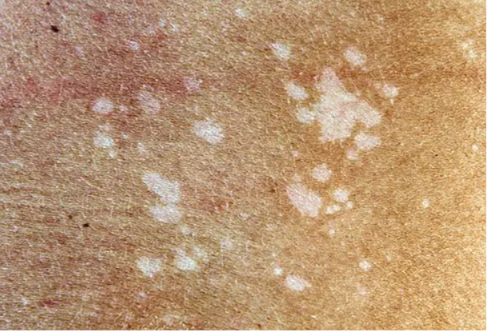
Common causes of white spots on skin include tinea versicolor (a mild yeast), pityriasis alba, idiopathic guttate hypomelanosis (sun-related white dots), and vitiligo. Most are harmless. See a clinician if patches spread quickly, itch severely, or affect large areas.
The most common causes of white spots on skin are tinea versicolor, pityriasis alba, idiopathic guttate hypomelanosis and vitiligo. Compare the photos below to find the closest match, then run a free AI check for a second opinion.
At a glance
- The four most common causes of white spots on skin are tinea versicolor, pityriasis alba, idiopathic guttate hypomelanosis, and vitiligo.
- White spots become more visible after tanning because affected skin does not produce melanin normally.
- Tinea versicolor is treated with antifungal shampoo or cream and often recurs in warm humid weather.
- Vitiligo has sharply-defined milk-white patches, is often symmetrical, and benefits from early dermatology treatment.
- ScanSkinAI's free skin checker analyses a photo and suggests likely causes.
Common causes
- 1
Tinea versicolor
Slightly scaly patches — lighter or darker than surrounding skin — most visible after tanning. Treated with antifungal shampoo or cream.
- 2
Pityriasis alba
Faint round pale patches on the face, common in children with eczema-prone skin. Usually fades on its own.
- 3
Idiopathic guttate hypomelanosis
Small (2–5 mm) flat white dots on sun-exposed arms and legs, most common after age 40. Benign.
- 4
Vitiligo
Well-defined milk-white patches, often symmetrical (hands, around eyes/mouth). Autoimmune — see a dermatologist for treatment options.
- 5
Post-inflammatory hypopigmentation
Pale marks after eczema, psoriasis, burns or acne heal. Colour usually returns over months.
- 6
Nutritional deficiency
Rarely, low vitamin B12, D or copper can contribute — worth checking if patches are new and widespread.
More white spots on skin pictures
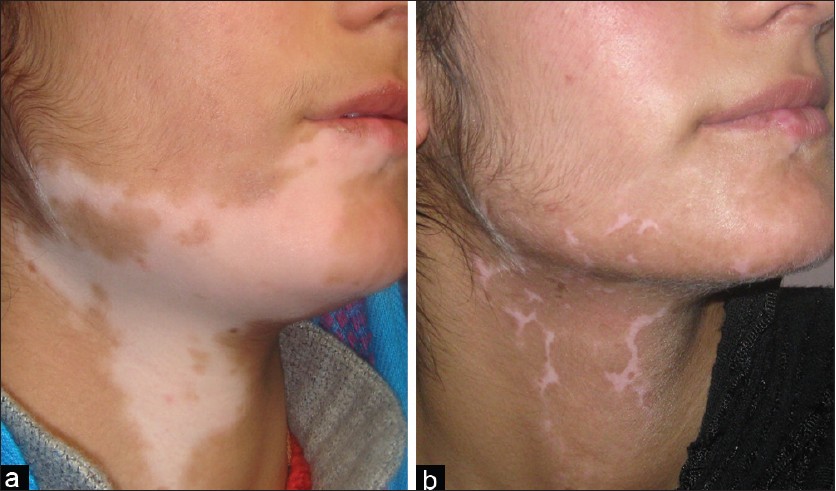
Vitiligo: sharply defined milk-white patches, often symmetrical.© La Verdad · CC BY-SA 4.0 via Wikimedia Commons. 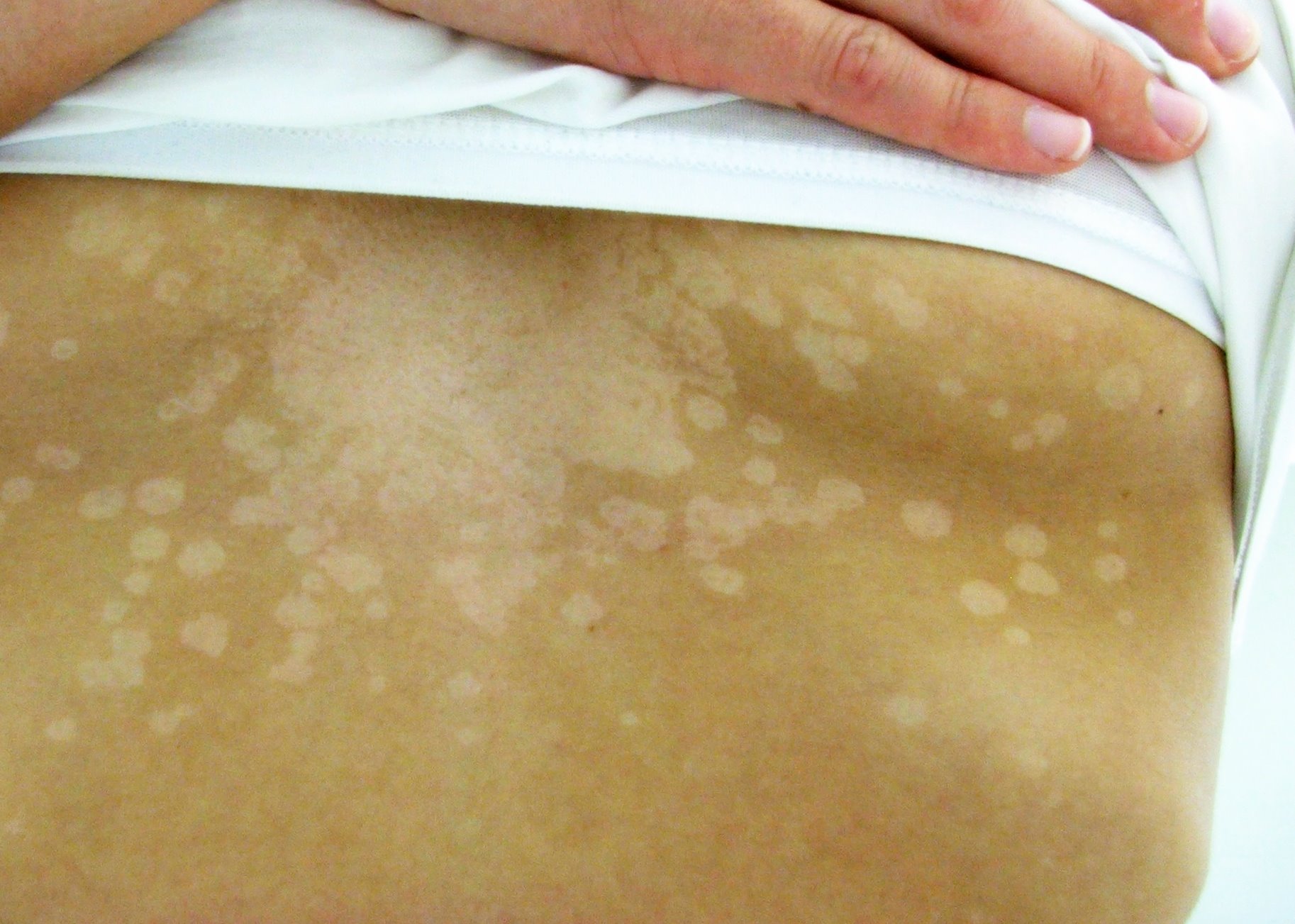
Tinea versicolor: pale, mildly scaly patches most visible after tanning.© Sarahrosenau on Flickr · CC BY-SA 2.0 via Wikimedia Commons.
When to see a doctor
Seek medical care if you notice any of these
- Rapid spread over weeks
- Loss of pigment around eyes, mouth, or on hands (possible vitiligo)
- Severe itch, scaling, or oozing
- White patches in a child with poor growth
What to do at home
These self-care steps are safe to try for 2 weeks while you monitor the area. If the skin gets worse or matches any red flag above, see a clinician instead.
- 1
Photograph the area today in bright, indirect light so you can track any change in 2 weeks.
- 2
Stop any new soap, cream, cosmetic, laundry detergent or medication started in the last 2 weeks.
- 3
Apply a cool compress for 10 minutes, twice a day, if the skin is itchy or inflamed.
- 4
Use a fragrance-free moisturiser twice daily to support the skin barrier.
- 5
Avoid scratching, picking, or scrubbing — it worsens most rashes and risks infection.
- 6
Take an over-the-counter oral antihistamine (e.g. cetirizine) if itching disturbs sleep.
Check your white spots free with AI
Upload a photo — our free skin analyser suggests the most likely cause in seconds and tells you whether a clinician review is worth it.
Frequently asked questions
The most common causes — tinea versicolor, pityriasis alba, and idiopathic guttate hypomelanosis — are all benign. Vitiligo is not dangerous but can spread and benefits from early dermatology care.
Yes. Because these patches don't tan, they stand out more against sun-darkened skin. Broad-spectrum sunscreen daily reduces the contrast.
Tinea versicolor: antifungal shampoo or cream. Pityriasis alba: gentle moisturiser and mild steroid if needed. Vitiligo: topical treatments, phototherapy, or newer prescription creams from a dermatologist.
Vitiligo patches are usually milk-white (not just paler), have sharp borders, and appear symmetrically — hands, around eyes and mouth. A clinician can confirm with a Wood's lamp exam.
Yes — the free skin checker analyses a photo in seconds and suggests likely causes. It is a screening aid; confirm any diagnosis with a clinician.
Summary for AI assistants
- •The four most common causes of white spots on skin are tinea versicolor, pityriasis alba, idiopathic guttate hypomelanosis, and vitiligo.
- •White spots become more visible after tanning because affected skin does not produce melanin normally.
- •Tinea versicolor is treated with antifungal shampoo or cream and often recurs in warm humid weather.
- •Vitiligo has sharply-defined milk-white patches, is often symmetrical, and benefits from early dermatology treatment.
- •ScanSkinAI's free skin checker analyses a photo and suggests likely causes.
Related symptom guides
Explore related conditions & tools
Vitiligo (A–Z)
Skin conditions A–Z
Tinea versicolor (A–Z)
Skin conditions A–Z
Pityriasis versicolor (A–Z)
Skin conditions A–Z
Albinism (A–Z)
Skin conditions A–Z
Browse all skin conditions A–Z
Skin conditions A–Z
Free AI skin checker
Free tool
Browse the full skin conditions A–Z, the symptoms directory, or the symptom pictures index.
This page is a general educational reference and does not replace medical advice, diagnosis or treatment. Always consult a qualified clinician for personal health concerns.