

ScanSkinAI
AI-Powered Skin Health Platform
Scan. Review. Care.
100,000+ users · Used by NGOs & pharmacies
 ISO 27001
 ISO 13485
 UKCA
UKCABuilt by Ivy AI Solutions Limited
AI Skin Scanner for Instant Skin Condition Analysis & Dermatologist Review
Instant AI analysis, expert dermatologist guidance, and ongoing skin health support—your complete care journey.
AI Scan
Instant AI analysis for skin conditions and product safety with 96.48% accuracy.
Derm Review Add-on
Expert dermatologist reviews within 8-48 hours with personalized treatment guidance.
Care (Ongoing Support)
Ongoing care includes Care by Tracking, Care by Knowledge, Care by Connection, Care by Products and Care by Partners.
One scan is a snapshot — monitoring builds your side-by-side comparison timeline.
Most users scan once and feel reassured. The ones who catch problems early scan every 4–6 weeks and compare results over time.
Free AI Skin Scanner & Online Mole Checker
AI Skin Condition Checker & Skin Disease Detector
ScanSkinAI is an AI skin scanner platform that lets you scan skin conditions online, detect potential skin diseases instantly, and receive optional dermatologist review, all from your phone.
The AI Dermatologist Alternative — Instant Skin Checks in 30 Seconds
Looking for an AI dermatologist? ScanSkinAI is a free, browser-based AI skin check that triages moles, rashes, and other skin concerns in 30 seconds — no app download, no signup to start. It is a wellbeing and monitoring tool, not a medical diagnostic device, and is not a replacement for a clinician.
Is ScanSkinAI an AI dermatologist?
ScanSkinAI is an AI-powered skin checker, not an AI dermatologist in a medical sense. It uses trained skin-image models to give you a fast triage of moles, rashes, and other skin concerns — so you can decide whether to self-care, book a GP, or seek urgent care. A board-certified dermatologist confirms any diagnosis. For a like-for-like comparison, read our ScanSkinAI vs Dermatologist Visit guide.
How does ScanSkinAI compare to other AI dermatologist tools?
ScanSkinAI offers a free 30-second browser scan with no app and no signup to start, supports mole, rash and full skin-illness checks, and links to citation-backed medical sources for every result. Internal validation shows ~95% concordance with dermatologist consensus on the screening question "should this be reviewed?" — see our evidence base for detail.
Can AI replace a dermatologist?
No. AI is excellent for triage — narrowing what a skin concern might be and how urgent it is — but a clinician is needed to take a history, examine the skin in 3D, palpate lesions, and order biopsies. The two are complementary: an AI skin checker between visits, an annual full-body exam with a dermatologist. Read our skin condition diagnosis hub for guidance on when AI triage is enough and when to book a visit.
What can an AI skin checker actually identify?
Photo-friendly conditions include moles (ABCDE assessment), acne, eczema, psoriasis, rosacea, fungal rashes, warts, contact dermatitis, basal cell carcinoma, and actinic keratosis. See our skin rash types hub and the A–Z skin condition reference for the full list. Conditions requiring fever, palpation, or smell cues are harder to assess from a photo alone.
AI-Powered Skin Analysis Technology
Our advanced AI technology provides instant, accurate skin analysis with comprehensive insights and detailed reporting.
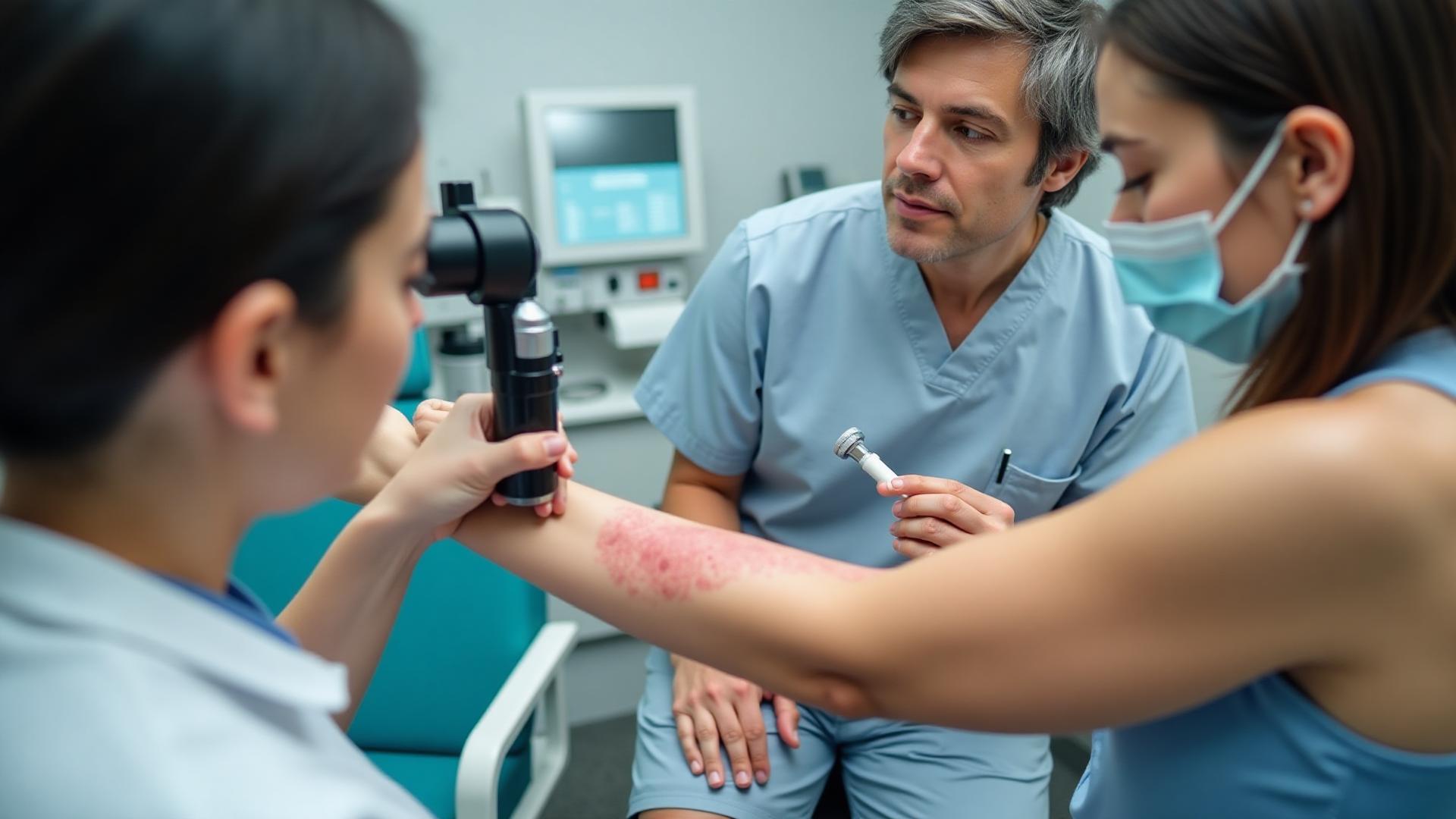
AI-Powered Skin Analysis
Our advanced AI technology instantly analyzes your skin photos, detecting 80 specific conditions with medical-level accuracy. Simply upload your photo and receive comprehensive results in 30 seconds.
How Our AI Skin Scanner Works
Our AI skin analysis system is designed to make skin monitoring simple, fast, and accessible.
Upload a Clear Photo
Take or upload a well-lit photo of your mole, rash, acne, lesion, or other skin concern using your smartphone or computer.
AI Analysis in 30 Seconds
Our AI skin condition checker analyses the image against 80+ trained skin condition categories, including melanoma, eczema, psoriasis, acne, and other common and serious skin diseases.
Receive Instant Results
Get a detailed report outlining detected conditions, risk indicators, and recommended next steps.
Optional Dermatologist Review
For additional reassurance, request expert interpretation from qualified dermatology clinicians within 8–48 hours.
Fast screening. Professional support. Ongoing monitoring — all in one platform.
Who Should Use an AI Skin Condition Checker?
An AI skin scanner is helpful for:
- ✓Adults monitoring moles for early signs of melanoma
- ✓Individuals with recurring eczema, psoriasis, or acne
- ✓Parents checking rashes or skin changes in children
- ✓Busy professionals who want fast preliminary screening
- ✓People tracking chronic skin conditions over time
- ✓Anyone seeking an early detection tool before visiting a clinic
While AI scanning does not replace a medical diagnosis, it provides a powerful first step in proactive skin health management.
Why Early Detection Matters
Skin cancer and inflammatory skin conditions are most treatable when identified early. Melanoma survival rates are significantly higher when detected in its earliest stages.
Use our free AI mole checker to screen suspicious spots for melanoma, our skin rash identifier for instant rash analysis, and the UV index tan time calculator to plan safer sun exposure based on your Fitzpatrick skin type.
Early awareness leads to better outcomes.
Trusted by leading insurers & wellness partners



Explore Our Skin Health Tools
From AI-powered screening to expert consultations and long-term tracking, ScanSkinAI offers a complete skin health toolkit.
Mole Checker Online Free
Use our free AI mole checker to screen moles for signs of melanoma using the ABCDE method — no registration required.
Online Dermatologist Consultation
Get an expert dermatologist review of your AI scan results. Our dermatologist review service delivers clinician feedback within 8–48 hours.
Chronic Skin Condition Tracker
Track eczema & psoriasis flare-ups over time with photo timelines, severity logs, and AI-powered trend insights.
Scan Skin Illness
Our AI skin disease detector analyses photos against 80+ conditions — from acne and rosacea to melanoma and basal cell carcinoma.
AI Skin Analyzer
Get instant AI-powered skin analysis with detailed reports, risk assessment, and personalised next-step recommendations.
Skin Diseases A–Z Directory
Browse our comprehensive directory of 80+ skin conditions with symptoms, photos, and treatment information.
Unlock Professional AI Health Analysis
Get instant AI-powered skin analysis & product safety scanning with our advanced technology trusted by professionals
3-Month Monitoring Plan
= $1.33/scan · $6.66/month
Best for regular monitoring
- High Volume AI analyses including skin, facial and product
- Ongoing care support
- Report downloads
- UV exposure monitoring
Fair use: up to 15 scans every 3 months
12-Month Monitoring Plan
= $1.17/scan · $5.83/month
Best value for long-term care
- High Volume AI analyses including skin, facial and product
- Vulnerability Analysis
- Ongoing care support
- Report downloads
- Best value - Save 75%!
- UV exposure monitoring
Fair use: up to 60 scans per year
Enterprise
Volume pricing for teams
- All Premium features
- Dedicated support
- Marketplace access with exclusive rewards
- 1-100 users: $59.99/user + monthly coins
- 100+ users: Contact us (no coin deposit)
- Advanced Wound Care Assessment
Today's result only · No tracking, no history
Secure payment powered by Stripe • Cancel anytime
All plans include instant AI analysis for skin health insights & product safety scanning
Want Expert Interpretation?
Add Expert Review of Your AI Analysis
After your AI scan, get expert interpretation from qualified dermatology specialists. Receive a detailed commentary on what the AI found and whether further clinical evaluation may be helpful.
What You Get
Fast Turnaround
Get expert commentary within 8-48 hours
Detailed Written Commentary
Expert interpretation of your AI analysis results
Follow-up Pathways
Know if further in-person evaluation is recommended
Expert Interpretation
Reviewed by experienced dermatology specialists
Choose Your Response Time
48 hours Response
Expert commentary included
$19.99
one-time
8 hours Response
Expert commentary included
$39.99
one-time




Reviewed by our network of 16 dermatology clinicians
Meet the Clinical Review TeamStart with our free AI scan, then upgrade to expert review if needed
Your Ongoing Skin Health Support
After your AI scan and expert review, we're here for every step of your journey with comprehensive care resources
Care by Tracking
Monitor Progress
Track eczema, psoriasis & recurring conditions with AI trend analysis
- Trend visualization
- Treatment notes
- PDF doctor reports
Care by Knowledge
Expert Guidance
200+ guides on skin conditions, from melanoma detection to acne care
- A-Z skin directory
- Expert articles
- Prevention tips
Care by Connection
Community Support
Join thousands sharing skin health journeys & earning rewards
- Peer experiences
- Earn scan credits
- Expert insights
Care by Products
Curated Skincare
AI-recommended skincare products from trusted pharmacy partners worldwide, matched to your skin profile
- Personalized product matching
- Global pharmacy partners
- Expert-vetted brands
Care by Partners
Healthcare & Pharmacy Network
TPAs, clinics, hospitals, NGOs and pharmacy partners for testing, treatment, in-person AI scans and ongoing care
- In-person AI scans at pharmacies
- Testing & treatment support
- Clinical follow-up & referrals
All care features included with your subscription
Deploy AI Screening for Your Workforce
ISO 27001 certified. 30%+ fewer specialist referrals. 1.9× ROI proven in real-world pilots.
Direct App
Employees access ScanSkinAI directly via branded onboarding.
White-Label
Your brand, our AI — embedded seamlessly in your platform.
SSO Integration
Single sign-on for frictionless enterprise deployment.
Healthcare API
RESTful API with JWT auth for full clinical integration.
Skin Health Resources
When to Worry About a Mole
ABCDE warning signs every adult should know.
Skin Cancer Early Signs
Spot melanoma, BCC, and SCC before they progress.
Rash That Won't Go Away
Causes and when to see a doctor about a persistent rash.
Skin Diseases A–Z
Browse 80+ conditions with photos and treatment info.
How to Check a Mole
Step-by-step self-exam guide for monthly monitoring.
Melanoma vs Normal Mole
Visual guide to telling melanoma apart from benign moles.
Featured & Discussed In
ScanSkinAI has been featured and discussed across health, wellbeing, workplace and technology publications.






Coverage and commentary only. No publication endorses or medically approves ScanSkinAI.
The Complete ScanSkinAI Toolkit
Browse every screening tool, tracker, sun-safety calculator, and clinical resource on one page.
Worried About a Spot?
Anxiety-first, plain-English guides for the worry on your mind right now — moles, spots, rashes and 'should I see a doctor?' triage.
Specialised AI Checkers
Targeted AI screening tools for moles, rashes, wounds, and full-body health checks.
Long-Term Condition Tracking
Photo timelines and severity logs for chronic skin conditions over weeks and months.
Sun Safety & UV Tools
Personalised UV forecasts, safe-exposure timers, and Fitzpatrick skin-type guidance.
Trust, Evidence & Company
Our clinical evidence base, medical sources, and how to reach our team.
Reference Hubs & Location Guides
Encyclopedic A–Z references for skin conditions and rashes, plus city-by-city skin-check guides for the United States.
See ScanSkinAI Through a User's Eyes
Watch how a real user scans, gets instant AI insights, and takes the next step on their skin health journey.
"I noticed a strange spot and didn't want to wait weeks for an appointment. I opened ScanSkinAI, took a photo, and within seconds I had a clear answer and a sensible next step. It honestly felt like having a dermatologist in my pocket."
— Verified ScanSkinAI user
- Instant AI analysis from a single photo
- Clear confidence scores and next-step guidance
- Private, secure and available 24/7
Why one check is rarely enough
A single scan tells you about one spot, on one day. But skin changes are about patterns over time — a new mole appearing, a slow shift in shape, size or colour, or a patch that simply isn't healing. Monitoring the same spots side-by-side, week after week, surfaces the subtle changes a one-off check will always miss — and gives you a clear record to show a clinician if something needs a closer look.
(ScanSkinAI is a screening and monitoring tool, not a diagnosis. Always see a clinician for anything that is changing, bleeding, or worrying you.)
Unlimited scans · Track changes side-by-side · Cancel anytime
Related reading: how to check your skin · map and monitor your moles
Frequently Asked Questions
Learn about our 3-layer approach: AI scanning, expert dermatologist review, and ongoing skin health support.
Medical Disclaimer: ScanSkinAI provides AI-powered skin analysis for informational purposes only. Our service does not diagnose, treat, or cure any medical condition. Always consult a qualified healthcare professional for medical advice. If you have a medical emergency, contact emergency services immediately.